An outdoor fire pit can transform your backyard into an inviting place for relaxing evenings with family and friends, extending your outdoor living well into cool autumn nights. But not all fire pits provide the same warmth. So how do you determine the BTU output your patio or deck needs? Let’s find out.
TL;DR: Match BTUs to your space: roughly 10,000 for a 150 sq ft patio, 40,000 for 550 sq ft, and 60,000+ for large areas. Portable propane pits run 14,000 to 40,000 BTUs; permanent pits reach 50,000 to 150,000. A 50,000 BTU gas pit warms a mid-size patio and burns about 8 to 9 hours on a 20-pound propane tank.
Key Takeaways
BTU (British Thermal Unit) measures the heat energy a fire pit produces per hour. Higher BTUs mean more heat and flame output.
Consider the size of the space, climate, desired warmth, and fuel type when determining the BTUs you need.
For small patios (~150 sq ft) aim for 10,000+ BTUs; for larger areas, choose pits with 50,000 to 150,000 BTUs.
Portable propane pits range from 14,000 to 40,000 BTUs. Permanent backyard pits reach 50,000 to 150,000 BTUs.
A deck with a sunken sitting area and a fire pit surrounded by greenery
What Is a BTU and How Does It Relate to Fire Pits?
BTU stands for British Thermal Unit and measures heat energy. Specifically, one BTU is the energy needed to raise one pound of water by one degree Fahrenheit. For fire pits, the BTU rating indicates the maximum heat the pit can produce per hour.
So the higher the BTU rating, the more heat and flame output it can deliver, which makes BTUs one of the most important specs when shopping for an outdoor fire pit. The rating correlates directly with:
Warmth generated
Flame height and intensity
Heated area capacity
Fuel efficiency
A diagram showing fire pit heating output in BTUs at various distances from the seating area
Factors That Determine How Many BTUs You Need
BTUs indicate a pit’s potential heat, but several other variables affect real-world heating capacity. Weigh these when choosing your ideal level.
Size of the Space
The size of your patio, deck, or backyard correlates directly with the BTUs needed. Here are general guidelines by square footage:
Size of Patio or Backyard (sq ft)
Recommended BTUs
150
At least 10,000
250
Around 20,000
550
Approximately 40,000
800
Around 60,000
1,200
At least 80,000
2,500
Up to 160,000
These are minimums for taking the chill off. For a small patio up to 150 sq ft, around 10,000 BTUs covers the basics, though many buyers size up for stronger, more reliable warmth. Matching the pit to your actual seating zone matters as much as the rating, so it helps to settle on the right fire pit area size first.
Type of Fire Pit
The fuel your pit uses affects its heat efficiency:
Wood-burning pits range from 30,000 to 100,000 BTUs but lose much of that heat to the surroundings.
Propane pits reach 40,000 to 150,000 BTUs. They burn hot, though propane doesn’t last as long per tank as other fuels.
Natural gas pits output 30,000 to 60,000 BTUs consistently, providing even, long-lasting heat.
Desired Warmth Level
Colder climates need higher BTUs; warmer regions need fewer to avoid overheating. Personal preference counts too, whether you like a roaring fire or a gentle flame.
Weather Conditions
Wind, cold, and moisture dissipate heat, so plan for higher BTUs on blustery evenings. Rain and snow lower the perceived temperature and increase your requirements.
Altitude
Higher elevations need more BTUs because thinner air provides less oxygen for efficient burning. Add 10-20% more BTUs above 2,000 feet.
Factor
Consideration
Space size
Bigger spaces need higher BTUs
Climate
Colder climates need more BTUs
Desired warmth
Personal comfort preferences affect needs
Weather
Wind, cold, rain, and snow increase BTUs needed
Altitude
Higher elevations need increased BTUs
BTU Recommendations by Fire Pit Type
Beyond overall BTU needs, consider the different styles available, each with its own heat output.
Portable Propane Fire Pits
Ranging from 14,000 BTUs on the low end to 40,000 for larger models, portable propane pits offer convenience and flexibility and are easy to move around your space. The smaller capacity limits the heat output, so portable propane pits work better for ambiance than for heavy warmth on cold nights.
Permanent Backyard Fire Pits
Hardscaped into a fixed location, masonry backyard pits tap into propane or natural gas and range from 50,000 to 150,000 BTUs. Models with 60,000 to 100,000 BTUs heat medium to large patios efficiently.
Fire Pit Tables
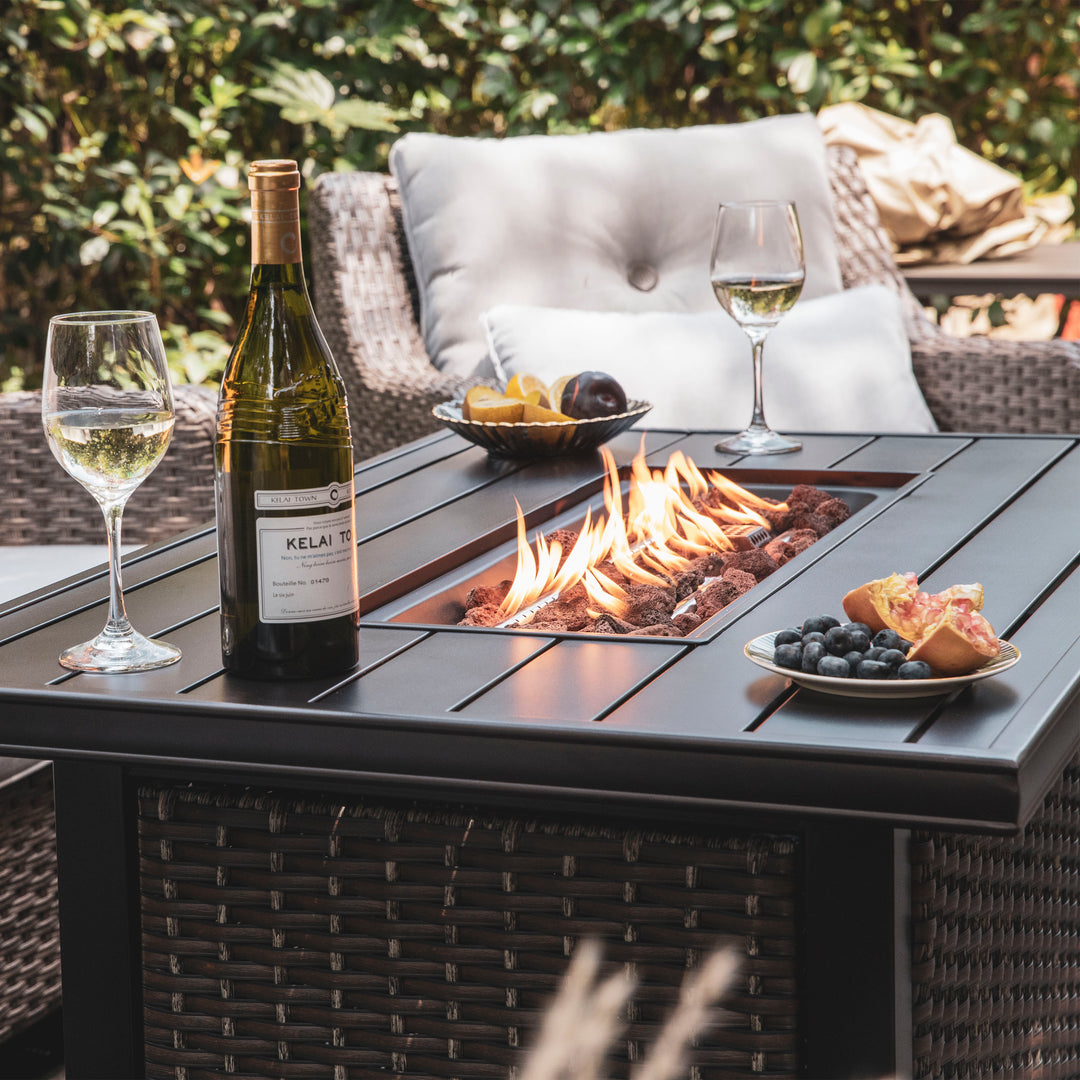
Fire tables combine form and function, with the flame in the center of a sturdy table. Run off a 20-pound propane tank hidden in the cabinet, they emit around 50,000 BTUs on average, and some larger models reach 70,000. They work best on smaller patios surrounded by seating.
Is 50,000 BTU Enough for a Fire Pit?
For most homeowners, yes. A 50,000 BTU gas pit comfortably warms a mid-size patio of roughly 300 to 500 square feet, which covers the typical backyard seating circle. Dialed down it sips fuel and runs much longer, while at full flame it works harder and empties the tank faster. On runtime, a standard 20-pound propane tank holds about 430,000 BTUs of stored energy, so a 50,000 BTU pit burns for roughly 8 to 9 hours, and a lower-output 40,000 BTU pit closer to 10.
Tips for Determining the Right Fire Pit BTUs
Record your area’s monthly low and high temperatures to gauge seasonal exposure.
Use an online BTU calculator for a general estimate based on square footage.
Compare the actual BTU ratings of specific makes and models in your preferred style.
Choose portable pits if flexibility outweighs heating power.
Opt for wood-burning only if you want that rustic, smoky character.
Confirm allowable BTU ratings under local fire codes for permanent installations.
Consider a model with a control valve so you can customize the heat.
Additional Safety Considerations
While BTUs relate to heat output, also keep safety in mind:
Follow installation and operation specs carefully to prevent leaks.
Allow adequate ventilation to prevent gas buildup.
Use a mesh screen to contain sparks and embers.
Keep portable units upright when moving them.
Shut off the gas supply when not in use.
Keep children and pets away from hot surfaces.
Larger pits with greater BTUs reach higher temperatures and call for more caution.
An outdoor fire pit table with seating and a dining set in the background
Conclusion
Choosing the right BTUs means weighing your space, climate, and style. For a typical patio around 200 square feet, roughly 15,000 to 20,000 BTUs takes the chill off, while larger 500+ sq ft spaces want 40,000 or more. A higher-output propane fire pit gives you headroom you can always dial down, so sizing up rarely hurts.
As you shop, note both the BTUs per burner and the number of burners, since together they set the maximum heat a pit can generate. Checking BTUs helps guarantee you get the glow and warmth you need to enjoy your outdoor living space year-round.
An outdoor area with a rectangular fire pit and comfortable seating
FAQs
How many BTUs do I need for a gas fire pit in my outdoor area?
There isn’t a one-size-fits-all answer, since it depends on your space, climate, and fuel. That said, most large fire pits require a minimum of 70,000 to 150,000 BTUs to heat a sizable area.
Does the fire media I use affect the heat output?
No. Fire glass or lava rock does not change the total BTUs. Only the fuel or wood type contributes to the energy output; the media simply distributes the flame and looks attractive.
Why does my natural gas fire pit require so many BTUs?
Natural gas is less energy-dense than propane, so it takes more natural gas to produce the same amount of energy as a smaller volume of propane. That is why natural gas pits are often rated for higher BTUs.
Can a wood-burning fire pit create as much energy as a gas fire pit?
In theory yes, but in practice gas pits often deliver more usable heat because the fuel is more efficient and consistent. A wood fire’s output varies with the dryness and type of wood you burn.
Can I adjust the heat level on my fire pit?
Yes. If your pit has a gas burner, you can usually adjust the BTUs by controlling the gas flow, giving you everything from a cozy low flame to a high-output, vibrant fire.





Leave a comment