Nobody wants the flame to die just as the second round of s’mores comes out. The good news: a standard 20-pound tank runs an average propane fire pit for 3 to 6 hours, and the two things that decide which end of that range you land on are simple, your tank size and your fire pit’s BTU rating. Understand both, and you can plan a tank swap before you ever run dry and stretch every fill further.
TL;DR: A standard 20-lb propane tank lasts 3 to 6 hours on an average fire pit and holds about 4.6 gallons, or roughly 430,000 BTU of energy (U.S. EIA). Burn time rises with a bigger tank and falls with a higher-BTU burner. A 50,000-BTU pit drains a 20-lb tank in about 4 to 7 hours.
Key Takeaways
A standard 20-lb propane tank lasts 3 to 6 hours on an average fire pit, depending on heat output.
The two factors that govern burn time most are tank size and your fire pit’s BTU rating.
Simple habits like weighing the tank and yearly inspections protect both your runtime and your safety.
A propane tank connected to a round fire pit with flames
How Many Hours Does a Propane Tank Last on a Fire Pit?
A 20-pound propane tank lasts 3 to 6 hours on a typical fire pit, with bigger tanks and lower-BTU burners pushing well past that. The math behind it is steady: one gallon of propane carries 91,452 BTU of energy (U.S. Energy Information Administration), and a filled 20-lb tank holds about 4.6 gallons. That works out to roughly 430,000 BTU per fill, so a 50,000-BTU pit running flat out burns through it in about four to seven hours.
Here is how the common setups shake out:
A standard 20-pound propane tank typically gives you 3 to 6 hours of burn time on an average fire pit.
Larger 30-to-40-pound tanks stretch that to 5 to 9 hours of use.
On a lower-BTU fire pit, a 20-pound cylinder can run 6 to 9 hours.
High-heat models over 60,000 BTU cut a 20-pound tank down to just 1.5 to 3 hours.
The pattern is clear: tank size and BTU output do most of the work. How often you run the pit, and how well you maintain it, fill in the rest.
Tank Size
Fire Pit BTU Rating
Estimated Burn Time
20-pound
20,000 BTU
8 to 9 hours
20-pound
50,000 BTU
3 to 5 hours
30-pound
50,000 BTU
5 to 7 hours
40-pound
60,000 BTU
6 to 8 hours
What Determines How Long a Propane Fire Pit Lasts
BTU output is the single biggest lever on burn time. BTU stands for British Thermal Unit, the measure of heat your burner throws, and more heat means more propane per hour. A 60,000-BTU model drinks fuel noticeably faster than a 30,000-BTU one, so the flame you choose at purchase shapes every refill that follows.
Four other factors move the needle:
Tank size. Bigger cylinders simply hold more propane, so they run longer. Smaller tanks burn out sooner but win on portability.
Wind exposure. An open, breezy patio pulls heat off the flame and makes the burner work harder. A windguard screen cuts that loss and saves fuel.
Cold weather. Low temperatures sap heat and lower tank pressure, shortening your runtime on a frosty night.
Maintenance. A clean burner and a leak-free connection burn efficiently. A neglected one wastes gas you paid for.
When you estimate your own burn time, pair your tank’s capacity with your fire pit’s BTU rating and then track a few sessions to find your real average. Most pits land within an hour or two of the table above once you know your habits.
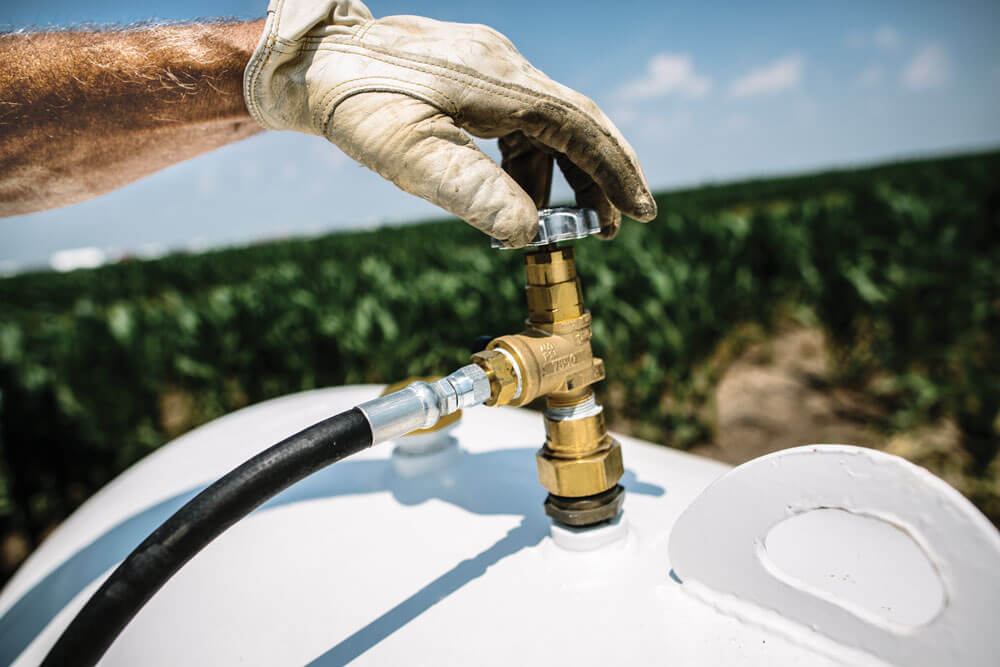
A person wearing a glove turns a brass valve on top of a large white propane tank with a hose attached, in a field
How to Check Your Fuel Level and Care for the Tank
Running out mid-evening is avoidable, because every pound of propane you burn equals about 15,000 BTU, so a quick weight check tells you exactly where you stand. Set the tank on a bathroom or kitchen scale, subtract the tare weight stamped near the handle (usually 17 to 18 lbs for a 20-lb cylinder), and what is left is your remaining fuel. Three reliable ways to gauge your level:
Weigh it. Note the full reading, then weigh again before a session. Each pound below your baseline is roughly 15,000 BTU already spent.
Read the float. Many larger tanks have a built-in float gauge that works like a fuel gauge for an at-a-glance estimate.
Slosh test. Tilt the tank gently and listen. Less liquid sound means less propane left inside.
Storage matters as much as fuel level. Keep the tank upright and detached from the pit between uses to limit rust, and never store or transport it indoors. Cap the valve to keep out debris, and stash it outdoors in a ventilated spot away from heat and sparks. These habits protect both your runtime and the tank itself.
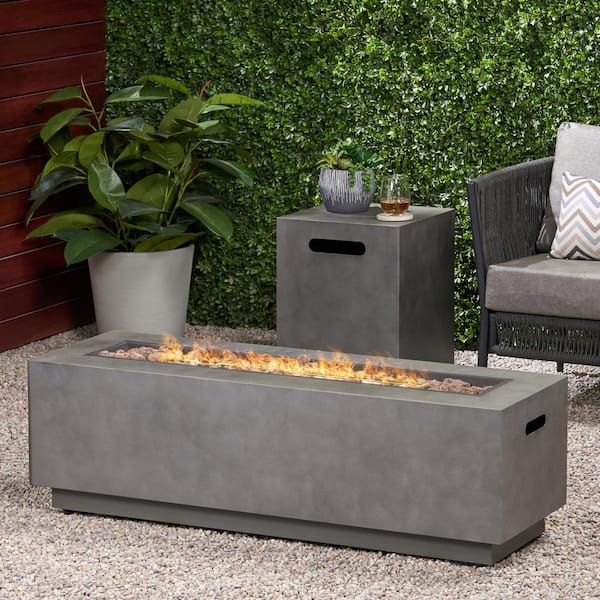
A rectangular fire pit with hidden propane tank storage, surrounded by outdoor furniture with a plant wall in the background
When to Replace a Propane Tank
A portable 20-to-40-lb propane tank lasts 15 to 20 years before metal fatigue becomes a real safety concern, and larger tanks can run safely for 20 to 30 years with care. Inspect portable cylinders at least once a year, and larger tanks over 100 lbs every three to five years. Track the manufacturing date stamped on the collar so you always know the tank’s age.
On each inspection, look for trouble before it finds you. Watch for dents, gouges, bulges, or rust around the valve and seams. For a suspected leak, brush soapy water over the connections and watch for foaming bubbles. And keep an eye on the certification date stamp, since an expired tank cannot be legally refilled until it is requalified.
Pay attention to performance, too. If your runtimes have quietly shortened or you are refilling more often than you used to, a small leak or a failing valve may be the cause. Repeated repairs every couple of years are a signal that replacement is the cheaper, safer call. While you are evaluating the tank, give the pit itself a look. If it is past its prime, our fire pit buyer’s guide walks you through picking the right replacement.
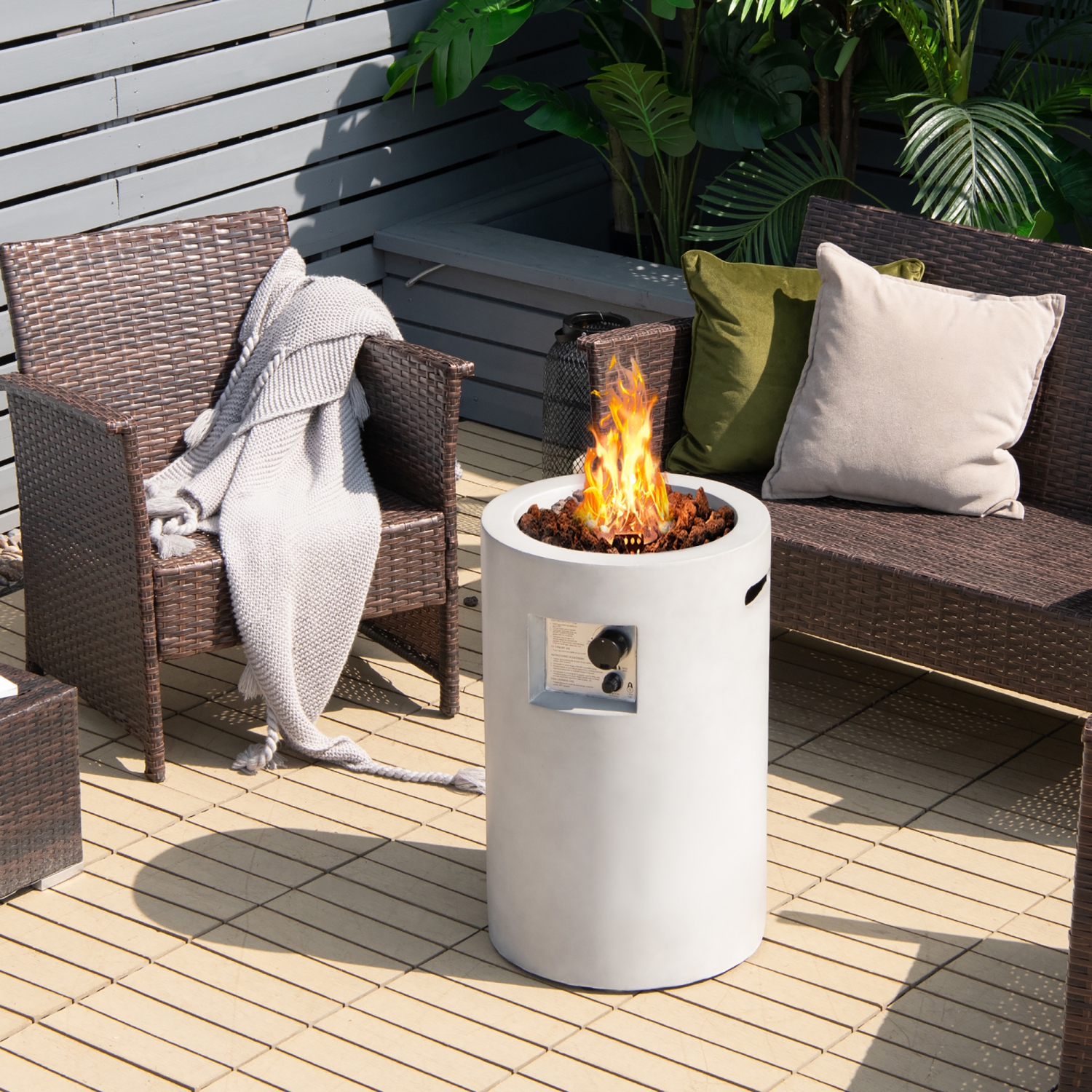
A round fire pit with hidden propane tank storage on a deck, surrounded by outdoor furniture with plants in the background
A quality steel or aluminum tank, weighed before each season and inspected yearly, should give you years of clean, smoke-free evenings. Match it to a fire pit sized for your space, and the only thing you will run out of is reasons to go inside.
FAQ
How much propane does a gas fire pit use per hour?
It depends on the burner’s heat output. A 50,000-BTU pit burns roughly half a gallon of propane per hour, which is why a 20-lb tank lasts about 3 to 6 hours. Lower-BTU models sip far less and stretch much longer on the same tank.
How can I make my propane tank last longer on a fire pit?
Run the flame lower when you only need ambiance, use a windguard to cut heat loss, and keep the burner clean. Choosing a larger tank or a lower-BTU pit also adds hours. Checking your fuel level before each session prevents the surprise empty that cuts an evening short.
What should I do if my tank runs low mid-session?
Keep a backup tank on hand so a swap takes two minutes instead of ending the night. Weighing your tank beforehand gives you fair warning, and a spare means you are never choosing between cold and inconvenient.




Leave a comment