Skip the prep and your stain will peel within a season, no matter how expensive the can was. To stain a pergola the right way, clean and brighten the wood, sand it lightly with 80 to 120 grit, let it dry at least 48 hours, then brush on thin, even coats of a penetrating exterior stain. Prep is roughly 80 percent of the result.
TL;DR: Clean and brighten the wood, sand with 80 to 120 grit, and let it dry 48 hours before you open a can. Brush thin, even coats of a semi-transparent oil stain at 50 to 70 F, wipe excess, and let each coat cure. Refresh the topcoat every 2 to 3 years and fully re-stain every 4 to 7.
Key Takeaways
Preparation makes or breaks the job. Clean, brighten, sand with 80 to 120 grit, and dry the wood 48 hours before staining.
Semi-transparent oil-based stain is the sweet spot for cedar. It penetrates deep, protects against UV and rot, and still shows the grain.
Apply thin, even coats at 50 to 70 F, out of direct sun, and let the wood absorb the stain before wiping excess.
Color options run from natural tones to semi-transparent to solid. Lighter, more transparent finishes show more grain.
Refresh a clear protective topcoat every 2 to 3 years, and plan a full re-stain every 4 to 7 years.
How to Stain a Pergola
Here is the short version before the detail. First, clean and brighten the wood to strip dirt, mildew, and gray weathering. Second, sand lightly with 80 to 120 grit to open the grain. Third, let the wood dry at least 48 hours after washing. Fourth, brush thin, even coats of penetrating exterior stain, let it soak in, then wipe the excess.
Everything below expands on those four steps. The reason this guide leans so hard on prep is simple: stain bonds to clean, dry, slightly abraded wood and fails on anything else. A flawless application over dirty or damp wood still peels.
Stain is the right call over paint for most pergolas. Paint lays a film on top of the wood that eventually cracks and flakes, while stain soaks into the cellular fibers and guards against cracking, peeling, and UV damage. The U.S. Forest Products Laboratory, the federal research lab that studies wood weathering and finishing, reaches the same conclusion: penetrating finishes outlast film-forming coatings on exposed outdoor wood. That is why a semi-transparent penetrating oil stain is the workhorse choice for cedar and other outdoor pergola woods.
dark stained pergola with outdoor furniture
What You’ll Need
Staining a pergola is straightforward once the right supplies are on hand. Gather these before you start so you are not running to the store mid-coat.
Stain and topcoat:
Exterior wood stain, oil-based for the deepest penetration and longest life
Sealant or topcoat such as spar urethane or a clear wood sealer
A 4 to 6 inch bristle stain brush
Lint-free rags for wiping excess
Painter’s tape for masking edges
Prep supplies:
Pressure washer for deep cleaning
Sandpaper in 80 to 120 grit to lightly scuff the surface
Paint scraper for removing loose finish
Wood brightener to lift graying and tannins
Dust mask
Optional:
Airless sprayer for large structures
Paint roller for flat surfaces
Wood conditioner as a pre-stain treatment for softwoods
Check the forecast first. Temperatures between 50 and 70 F let the stain penetrate properly. Avoid direct sun, which flash-dries the surface, and never stain if rain is expected within 24 to 48 hours.
Prep the Wood
Proper preparation is the part most people rush, and it is where most failures start. Work through these four steps in order.
Inspect. Examine every board for cracking, warping, or rot, and replace anything compromised. Hammer protruding nails flush, caulk open joints, and test old finish with a scraper to see whether it peels or sands off.
Clean and brighten. Pressure-wash all surfaces to strip dirt, mildew, and cobwebs, then let the wood dry for at least 48 hours. On gray, weathered wood, follow with a wood brightener to lift tannins and restore the natural tone. Wipe down with a tack cloth to catch remaining dust.
Sand. Lightly sand with 80 to 120 grit to open the grain so stain soaks in evenly. Focus on rough-sawn spots, milling marks, and raised grain, and avoid rounding over crisp edges. Vacuum every bit of sawdust afterward so it does not lodge in the finish.
Strip old finish. To remove an old coat entirely, work in sections with a scraper and wire brush. For partial removal, scuff still-adhered areas with the same 80 to 120 grit so the new coat bonds. Brighten the bare wood again before staining.
staining a wood pergola
Apply the Stain
Once the wood is clean, dry, and lightly sanded, application is the easy part. A high-quality brush is the most foolproof tool because it works stain into cracks, joints, and carvings. For very large structures a sprayer speeds things up, but always back-brush to push the stain in and catch missed spots.
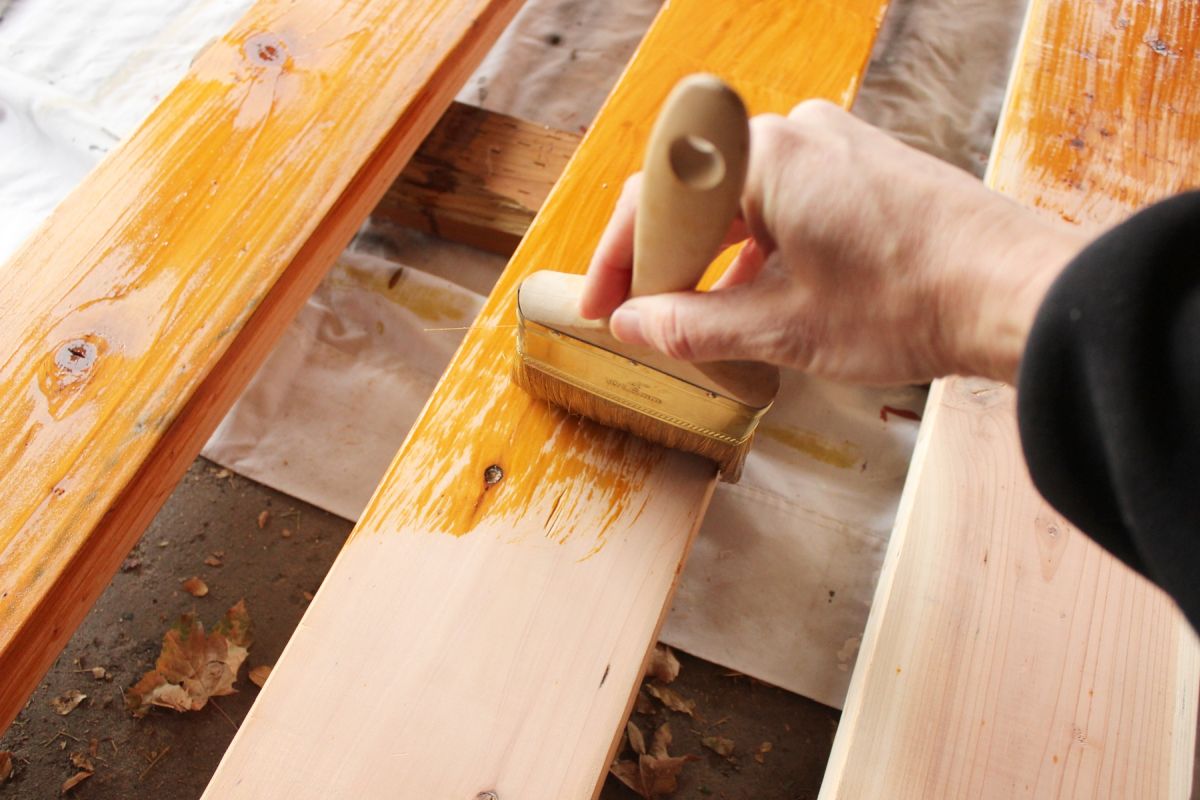
Use a 4 to 6 inch bristle brush and stroke with the grain, keeping a wet edge to prevent lap marks. Angle the brush to coat all four sides of each slat, and on posts, brush in a spiral from top to bottom while rotating to reach every face. Work systematically from one end of the pergola to the other, stepping back often to catch thin spots before they dry.
Let the first coat soak in for 15 to 20 minutes, then wipe excess with a clean rag so the finish penetrates rather than sits on the surface. Follow the can’s dry time before a second coat, which is often 24 to 48 hours for oil-based stains, and add coats until the color depth looks right. Manufacturer guidance matters here, and brands like Penofin publish per-product cure times worth following exactly.
outdoor living today breeze pergola with fire table and outdoor furniture beside pool
Stain Color Options
Stain color falls into three families, and the right one depends on how much grain you want to keep. Natural tones and semi-transparent finishes show the wood; solid stains hide it for a bold, uniform look. For cedar specifically, a semi-transparent oil stain is the sweet spot, since it adds warmth and protection without burying the grain you paid for.
Natural wood tones keep the look subtle and showcase grain. Popular picks include Redwood, Pine, Light Oak, Birch, and Driftwood. These suit redwood, pine, and fir.
Semi-transparent stains add light color while letting grain read through: Teak, Pecan, Mahogany, Chestnut, Walnut, and Cordovan Brown. They are the most versatile option across wood types.
Solid color stains are opaque and cover the grain for maximum transformation: Forest Green, Navy Blue, Black, Gray, and Dark Brown. They cover best on smoother woods.
If you are still choosing wood and finish together, the species you pick changes which stain looks best, so it helps to compare the best wood for a pergola before you commit.
Wood Type
Recommended Stain
Redwood, Pine, Fir
Natural tones, semi-transparent
Smooth woods like cedar
Solid colors or semi-transparent
Heavily grained woods
Natural, semi-transparent
pergola stain color options with paint brush
Maintenance and Re-Stain Cadence
A well-stained pergola can run 15 to 20 years before a full refinish, but only with routine upkeep. The two timelines below are not a contradiction. They are two different jobs.
The lighter job is the topcoat. A clear protective topcoat wears off the high-exposure surfaces first, so refresh it every 2 to 3 years to keep moisture and UV from reaching the stain underneath. The heavier job is the stain itself, which you fully re-apply every 4 to 7 years depending on sun and weather exposure. Between those, clean the structure yearly with a pressure washer and brightener, and spot-sand and touch up any worn sections as they appear.
When the time comes for a full re-stain, repeat the prep steps from earlier: clean, brighten, sand, and strip as needed before the new coat goes on. A fresh color is an easy way to update the whole look, and once the new coat cures, hanging lights on a pergola gives the refreshed wood a warm glow after dark.
Task
Frequency
Clean with pressure washer and brightener
Yearly
Inspect for damaged areas
Yearly
Spot-treat repairs
As needed
Apply fresh protective topcoat
Every 2 to 3 years
Completely re-stain
Every 4 to 7 years
If you are weighing wood species before a build or replacement, our cedar pergola kits take stain especially well and reward the maintenance routine above.
man power washing a pergola
FAQ
Should you stain or paint a pergola?
Stain, in almost every case. Stain penetrates the wood and ages gracefully, while paint forms a surface film that eventually cracks and peels and is far harder to refresh. Stain also lets the natural grain and texture of the wood show, which is usually the whole point of a wood pergola. Paint only makes sense if the wood is already in poor cosmetic shape and you want a uniform, opaque finish.
What type of stain is best for a pergola?
A semi-transparent oil-based stain is the best all-round choice. The oil soaks into the wood fibers for deep UV and moisture protection, and the semi-transparent tint adds color while keeping the grain visible. Go more transparent to show maximum grain, or step up to a solid stain if you want full, opaque coverage. Our pergola buying guide covers build help and finish pairings if you are choosing a kit from scratch.
Can you stain a cedar pergola?
Yes, and cedar is one of the best woods to stain. Its open grain accepts stain readily, and a semi-transparent oil finish brings out cedar’s warm color while protecting the softer fibers that can crack if left bare. Clean and lightly sand first, then apply thin coats so the stain penetrates evenly rather than pooling on the surface.
Can you stain a pressure-treated pergola?
Yes, but timing matters. New pressure-treated wood carries moisture and chemical residue from the treatment process, and stain will not bond until it dries out. Let it weather for a few months, often 3 to 6 months, before staining. Test readiness by sprinkling water on the surface: if it beads, the wood is still too wet; if it soaks in, it is ready for stain.





Leave a comment