Polycarbonate vs Glass Greenhouse: Which Is Better?
Pick the wrong glazing and you either bake your plants in summer hot spots, lose heat all winter, or sweep up shattered panes after the first hailstorm. The choice between a polycarbonate and glass greenhouse comes down to four numbers: how much light gets in, how much heat stays in, how hard it is to break, and what it costs you upfront. Get those right for your climate and you stop fighting your greenhouse and start growing in it.
TL;DR: For most backyard and hobby growers, polycarbonate wins. It insulates roughly ten times better than single-pane glass, shrugs off hail at about 200 times glass’s impact strength, and costs far less upfront. Glass earns its higher price only when you need peak winter light, a 40-plus-year lifespan, or showpiece looks.
Polycarbonate is the better all-around choice for hobby greenhouses in most climates because it insulates better, survives impacts, and costs less to buy. Glass is the better choice if you want the brightest possible light, a lifespan measured in decades, and the classic look. The rest of this guide shows where each wins. Browse our polycarbonate greenhouses and glass greenhouses as you read.
a photo comparison between a glass and polycarbonate greenhouse
Key Differences Between Polycarbonate and Glass Greenhouse Glazing
Glass and polycarbonate split along four lines: light, insulation, durability, and cost. Glass transmits about 90% of light and lasts 40 to 50 years. Polycarbonate transmits 70 to 83%, insulates far better, resists impact at roughly 200 times glass’s strength, and costs a fraction as much upfront while lasting 10 to 25 years.
The Royal Horticultural Society notes that glass “lets 90 percent of light through, does not degrade in sunlight and, unlike plastic materials, reflects heat radiated from within back into the structure.” Polycarbonate, by contrast, is twin-walled, breakage-resistant, lightweight, and holds heat well. Each strength below maps to a specific growing situation.
Light Transmission and Diffusion
Plants need adequate light to grow, and this is the one category where glass holds a clear edge. According to greenhouse glazing experts, glass transmits around 90% of available light, while polycarbonate panels transmit around 70 to 83% depending on thickness. The Royal Horticultural Society independently confirms the 90% figure for glass and rates it the best glazing where light is the priority.
There is a tradeoff hiding in that number, though. Polycarbonate diffuses incoming light, spreading it evenly instead of casting hard direct beams. That diffusion prevents hot spots and scorching and promotes uniform growth on lower leaves. So while glass delivers more total light, polycarbonate often delivers more usable light for dense hobby planting. Grow sun-hungry crops and glass is preferable; for most backyard growers, polycarbonate’s diffused light is plenty.
Durability and Impact Resistance
This is polycarbonate’s strongest category. Its high strength-to-weight ratio makes it 200 times stronger than glass and 30 times stronger than acrylic. Polycarbonate glazing can take hail, falling branches, and stray baseballs that would shatter glass on contact.
Glass is rigid and clear, but it is brittle. Any impact hard enough to break a pane usually means replacing the whole pane, while polycarbonate flexes and resists fracturing. For greenhouses in storm-prone or high-traffic yards, polycarbonate’s impact resistance is hard to argue with. If you want glass in a rough climate, specify laminated or tempered safety glass to cut the breakage risk.
Insulation and Temperature Regulation
A greenhouse holds stable temperatures only as well as its glazing insulates, and polycarbonate is built for this. Its layered structure traps air pockets that slow heat transfer. Industry testing puts polycarbonate sheets around an R-value of 1.54, while standard single-pane glass at 6mm thickness offers an R-value of about 0.16. That is nearly ten times the insulating value.
In plain terms, a polycarbonate greenhouse holds warmth overnight and costs less to heat through cold months. The University of Massachusetts greenhouse program notes that polycarbonate and acrylic structured sheets “provide greater insulation but increase initial cost.” Single-pane glass loses heat fast and swings in temperature, especially during rapid nighttime cooling. Glass can match polycarbonate’s insulation only with double or triple panes, which raises the price sharply.
Safety and Security
Polycarbonate is inherently shatterproof, which makes it the safer pick if children or pets will be around the structure. There are no sharp shards to worry about if something hits a wall. Its strength also makes it difficult to break through, adding a measure of security against intruders.
Glass breaks more easily, but you can close most of that gap with laminated or tempered safety glass. The Royal Horticultural Society recommends toughened glass for doors and anywhere a person could fall against a pane. That upgrade adds cost but keeps glass viable for family backyards.
Costs and Maintenance
Upfront, polycarbonate is far cheaper. Polycarbonate glazing material costs only a fraction of glass per square foot, while glass runs about $2 to $2.50 per square foot before framing and foundation. Glass is also heavy, which forces a sturdier frame and more substantial foundation, pushing the total install cost higher still.
Over decades, the math shifts. Polycarbonate lasts 10 to 25 years before panels need replacing, while glass lasts 40 to 50 years. A glass greenhouse you buy once may outlast two or three rounds of polycarbonate panels, so for permanent installations the higher upfront cost can pay off. Both materials clean up with mild detergent and water. Factor in your timeline, budget, and how long you plan to keep the structure.
an actual product image of the Hoklartherm Riga Greenhouses 5
Advantages and Disadvantages of Polycarbonate Greenhouses
Polycarbonate’s profile is built around toughness, warmth, and affordability, with lifespan and total light as the tradeoffs.
Pros of Polycarbonate Glazing
Extremely durable and impact-resistant
Provides UV protection
Strong thermal insulation (roughly R-1.54 vs glass R-0.16)
Lightweight compared to glass, so easier to frame and assemble
Lower upfront cost
Diffuses light for a uniform growing environment
Cons of Polycarbonate Glazing
Can discolor and yellow over time without UV treatment
Shorter lifespan, 10 to 25 years
Not readily recyclable
Releases toxic fumes if burned
Transmits less total light than glass
Advantages and Disadvantages of Glass Greenhouses
Glass trades toughness and insulation for unmatched clarity and longevity. If light and looks top your list, read this side closely.
Pros of Glass Glazing
Transmits more natural sunlight, around 90%
Will not degrade, yellow, or cloud over time
Long lifespan of 40 to 50 years
Recyclable and environmentally inert
Classic appearance and strong resale value
Cons of Glass Glazing
Vulnerable to breakage from hail and debris
Requires heavier framing and a substantial foundation
Weaker thermal insulation as single pane
Higher heating costs
Heavy and harder to transport and install
When you line up the lists, polycarbonate excels in durability, insulation, and cost, while glass maximizes sunlight and lasts the longest with the clearest surface. Decide which of those factors matters most for your growing.
Comparing Polycarbonate and Glass Greenhouses for Environmental Impact
Sustainability cuts both ways here. Glass is the greener material to make and dispose of, but polycarbonate is greener in daily use because it wastes less heat. Which matters more depends on whether you weigh manufacturing or operating impact more heavily.
Manufacturing and Disposal
Polycarbonate comes from petroleum-based chemicals, so it starts with a larger carbon footprint than glass. Standard panels cannot be easily recycled and can release fumes when incinerated, making end-of-life disposal a real consideration. Glass, by contrast, is made from sand, limestone, and soda ash, is recyclable, and sits inertly in a landfill. Hauling heavy glass does burn more fuel in transport, but on balance glass remains the greener material to produce and discard.
Energy Efficiency in Use
Once installed, polycarbonate is the more efficient material. Its layered air gaps cut conductive heat loss, so it holds warmth and trims heating bills through cold weather. A glass greenhouse can match that performance only with double or triple panes, often paired with low-E coatings that raise the price. So polycarbonate wins on in-use energy efficiency, while glass wins on manufacturing and disposal. Pick the side that fits your priorities.
a side by side photo of polycarbonate and glass sheets
Choosing the Best Glazing Material for Your Greenhouse
Match the material to your climate, budget, and goals rather than chasing a single “best” pick. Cold and storm-prone climates point to polycarbonate. Peak-light and permanent-structure goals point to glass. Most hobby growers land on polycarbonate.
Consider Your Climate and Growing Goals
In regions with cold winters, polycarbonate’s insulation is a real advantage. It retains heat, cuts your heating costs, and extends the growing season, which also makes it the better pick for high-altitude sites. If you grow crops that demand peak sunlight and you live somewhere with mild winters, glass may serve you better. For hobby greenhouses focused on recreation rather than maximum yield, polycarbonate is almost always enough.
Evaluate Your Budget and Quality
Polycarbonate delivers big upfront savings but needs panel replacement over a 10 to 25 year horizon. For hobby or temporary greenhouses, that low initial cost usually outweighs the lifespan gap. For permanent or commercial structures, glass earns back its higher price across 40 to 50 years of reliable service, and it can lift resale value too. If you are still weighing panel choices, our guide to 4mm vs 6mm polycarbonate breaks down thickness against insulation and cost.
Prioritize Key Qualities Like Durability, Insulation, and Light Transmission
If your area sees hail or heavy snow loads, polycarbonate’s impact resistance is protection you will be glad you bought. For glass in those conditions, laminated safety glass is the move. If extending the season with maximum insulation is the goal, polycarbonate excels again. And if the brightest possible light is what you are after, glass stays the leader. Our roundup of the best greenhouse kits shows how these tradeoffs play out across real models.
an actual image of the Exaco Janssens Royal Victorian VI Greenhouse VI 23 surrounded by plants
Final Recommendations on Polycarbonate vs Glass Greenhouses
When you weigh every factor, a few clear calls fall out:
For hobby greenhouses in temperate climates, polycarbonate offers the best mix of affordability, durability, and function.
In cold climates, polycarbonate’s insulation drives big gains in heating efficiency and season length.
For permanent commercial greenhouses focused on maximum yield, glass justifies its higher price with peak light and decades of clarity.
In regions with heavy snow, hail, or harsh winters, polycarbonate is tough to beat on both economics and protection.
For environmentally minded growers, glass is the more sustainable material to make and dispose of, while polycarbonate is more energy efficient in use.
Here is a quick rundown of recommended materials by greenhouse type:
Type of Greenhouse
Recommended Material
Hobby greenhouse
Polycarbonate
Cold climate
Polycarbonate
Commercial greenhouse
Glass
Severe weather region
Polycarbonate
Environmentally friendly
Glass
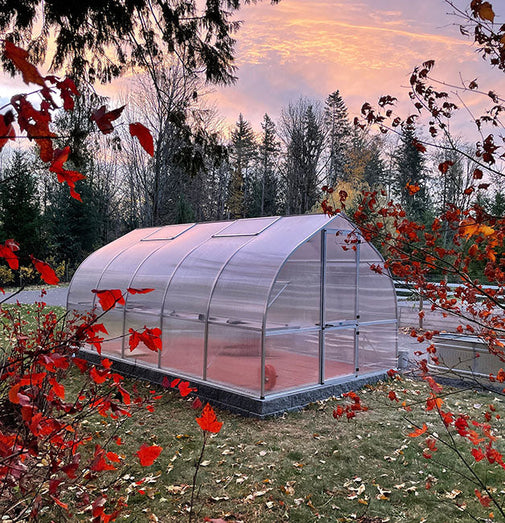
Hoklartherm Greenhouse model riga 3 in a backyard
For most hobby growers, polycarbonate is the better glazing. Its durability, insulation, and lower cost are hard to match, and its diffused light is plenty for small-scale growing even though glass transmits more total light. If you want to extend your season on a budget, polycarbonate is the practical pick. If peak light, decades of clarity, and classic looks top your list, glass is worth the investment. Ready to choose? Compare models across our full greenhouse kits for sale range and find the fit for your yard.
FAQs
Is polycarbonate or glass better for a cold climate?
Polycarbonate is the better choice for cold climates. Its twin-wall structure traps air and delivers an R-value around 1.54, nearly ten times the roughly 0.16 of single-pane glass, so it holds heat overnight and cuts winter heating costs. Glass can compete only with double or triple panes, which raise the price significantly.
Can you use old windows to build a greenhouse?
Yes, you can build a greenhouse from reclaimed glass panels or old windows, and it is a cheaper, more sustainable option. Just know it will not match the durability, insulation, or UV protection of purpose-made polycarbonate or horticultural glass. Check each pane for cracks and seal the frame well so you do not lose heat through gaps.
Does polycarbonate yellow over time?
Polycarbonate can yellow over the years as UV exposure degrades the surface, but quality panels come with a UV-protective coating that slows this considerably. Keep them clean with mild detergent and water, and look for panels carrying a UV warranty. Glass, by contrast, will not discolor or cloud over its 40 to 50 year lifespan.





Leave a comment