Most greenhouse plants want 40-60% relative humidity, and when the air drops below that you will see dry leaf tips, wilting, and slow growth. To raise low humidity, run a cool-mist humidifier, mist by hand, add an evaporative cooler, group plants together so they share their transpired moisture, and open vents on humid days. Every plant has its own preference, but 40-60% RH is the safe general target to aim for first.
TL;DR: Most greenhouse plants thrive at 40-60% relative humidity. Raise low humidity with a cool-mist humidifier, hand misting, an evaporative cooler, grouped plants, and well-timed venting. Warm air holds more moisture, so for every 20°F rise the air’s water capacity doubles and relative humidity is cut in half (UConn IPM).
an image of plants in a humid greenhouse
How to Measure Greenhouse Humidity
You cannot fix humidity you cannot see, so start with a hygrometer. Place it at plant level in a shaded spot away from direct sun and read it morning and afternoon, since humidity swings as temperatures rise and fall. Aim for 40-60% relative humidity for most plants. Relative humidity describes how much moisture the air holds compared with the most it could hold at that temperature (UGA CAES).
A hygrometer measures relative humidity, which is the current moisture in the air compared with the maximum the air could hold at that temperature. Analog and digital models both work, though digital units tend to read more precisely. Check the readings twice a day, because humidity fluctuates significantly between morning and afternoon as the greenhouse warms and cools.
A relative humidity of 50% means the air is holding half of the maximum water it could hold if it were saturated at that temperature, according to University of Georgia CAES extension. That is why the same amount of water vapor reads as a different humidity percentage at different times of day.
Ideal Greenhouse Humidity Levels for Plants
Most greenhouse vegetation does well around 40-60% relative humidity, and individual species shift within or just outside that band. Use these per-plant ranges as a starting point:
Orchids - 50-70% RH
Succulents and cacti - 40-55% RH
Tomatoes and peppers - 45-60% RH
Leafy greens - 45-55% RH
Tropical plants - 55-70% RH
Conditions far outside a plant’s range invite trouble, including stunted growth, leaf curling, tip burn, and powdery mildew.
Signs Your Greenhouse Humidity Is Too Low
When relative humidity dips below 40%, the plants tell you first. Watch for leaves yellowing or browning at the tips and margins, foliage and stems that feel dry or crispy, wilting even when the soil is well watered, and noticeably slow growth. Catching these signs early means you can add moisture before the damage sets in.
a white glass greenhouse with an open vent surrounded by plants
5 Ways to Increase Humidity
When your hygrometer reads below your plants’ preferred range, five methods reliably add moisture to the air: a cool-mist humidifier for whole-room control, hand misting for hotspots, an evaporative cooler that humidifies while it cools, open vents to pull in outdoor moisture, and simply growing more plants. Fan-and-pad evaporative cooling both lowers heat and adds humidity (UGA CAES), which makes it a favorite in hot, dry climates.
University of Georgia extension notes that a fan and pad system using evaporative cooling “eliminates excess heat and adds humidity,” because water evaporating off the wet pads raises the moisture in the incoming air. That dual effect is why evaporative coolers earn their place in dry-summer greenhouses where heat and low humidity hit at once.
1. Use a Cool-Mist Humidifier
A cool-mist humidifier is the most direct way to raise humidity on demand, and many affordable units are sized for greenhouse use. Set it on the floor or hang it above the plants, then run it whenever the hygrometer reads below target. Refill it regularly with distilled water to prevent mineral scale. Unlike a quick mist, a humidifier delivers steady moisture across the whole space.
2. Hand Misting and Watering
Misting plants or wetting nearby surfaces gives a short local humidity bump as the water evaporates. The effect fades fast, so you would need near-constant misting to hold a target, and overdoing it invites mold. Treat misting as a spot fix for dry pockets rather than a whole-greenhouse solution, and keep a cloth handy to wipe down overly wet leaves.
3. Use Evaporative Coolers
An evaporative cooler, or swamp cooler, adds cooling and humidity at the same time. As water evaporates from its saturated pads, moisture enters the greenhouse air, so position the unit near plants that like extra humidity. This pairing of cooling plus added moisture makes it well suited to hot, dry climates where heat alone drives relative humidity down.
4. Open Vents
Cracking a vent lets outdoor humidity mix with the inside air, which helps most on already-humid days. In dry climates venting alone rarely moves the needle much, but paired with misting or a humidifier it helps stabilize moisture. Vents work both directions: open them when humidity climbs too high so damp air escapes and drier air moves in.
5. Grow More Plants
Plants humidify their own space. As they transpire, leafy growers and large tropicals release moisture into the air, so clustering plants pools that effect and raises local humidity naturally. Keep an eye on airflow when you group them tightly, because stagnant, crowded foliage can encourage disease.
Here is a quick comparison of the main humidity-boosting methods:
Method
Pros
Cons
Humidifier
Effective for the whole greenhouse
Requires maintenance
Misting
Boosts local humidity
Temporary, risks mold
Evaporative cooler
Adds humidity and cooling
Effect strongest near the cooler
Venting
Uses natural outdoor humidity
Limited effect in dry climates
More plants
All-natural, no equipment
Needs adequate airflow
Each method has trade-offs, and combining two or three is usually the most reliable way to hold your target across a full day.
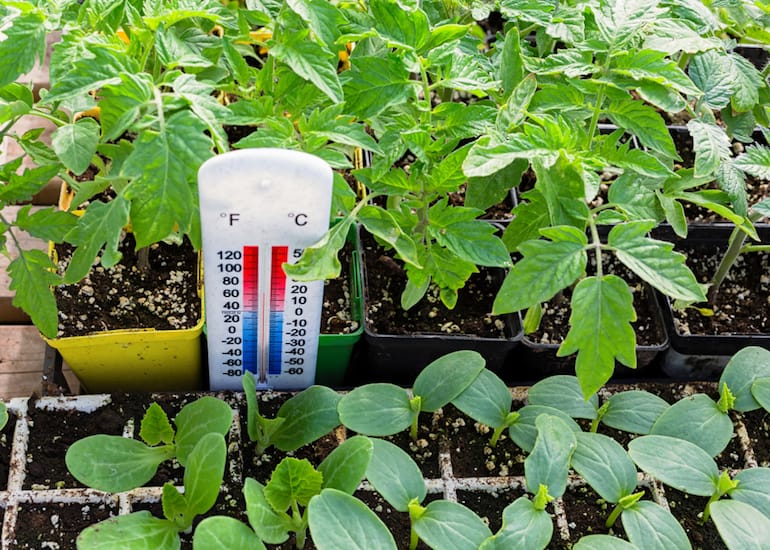
an image of a thermometer in between plant trays
Managing Temperature Alongside Humidity
Temperature and relative humidity move in opposite directions inside an enclosed greenhouse. As the air warms, its capacity to hold water vapor rises, so the relative humidity percentage falls even when the actual moisture stays the same. University of Connecticut IPM puts a number on it: for every 20°F rise in dry-bulb temperature, the air’s water-holding capacity doubles and relative humidity is cut in half. That is why a heated greenhouse so often reads dry.
According to University of Connecticut extension, “for every 20 deg F rise in dry bulb temperature, the water-holding capacity of the air doubles and the relative humidity is reduced by one-half.” The practical takeaway: warming the space is one of the fastest ways to accidentally crash your humidity reading.
To keep both in balance, track temperature and humidity together with a combo thermometer-hygrometer, reading it early morning and late afternoon. Turning a heater or exhaust fan down slightly lets more moisture stay in the air, but lower the heat gradually so plants are not chilled, and see our guide on how to heat a greenhouse for setting that baseline without crashing humidity. Adding moisture through misting or a humidifier raises humidity without dropping the temperature, which is the cleaner lever when the air is both warm and dry. Sealing drafty cracks and insulating cool-weather greenhouses helps hold heat and moisture in at once, so you keep warmth and humidity in step through the cold months.
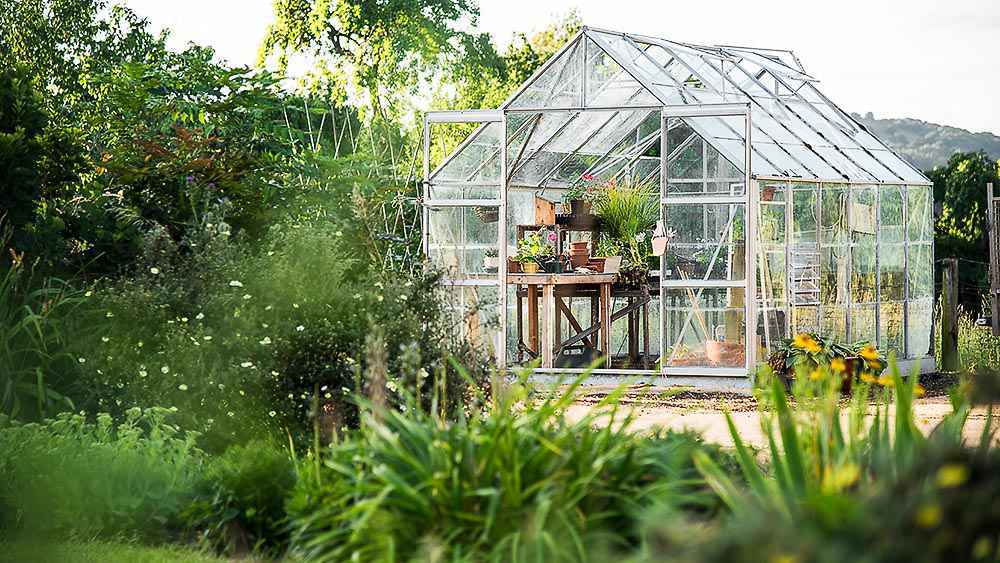
a glass greenhouse with its double doors open surrounded by plants
Holding the Ideal Balance
The goal is a steady pairing of warmth and moisture rather than a single perfect number, so monitor closely and adjust in small steps. Read your hygrometer and thermometer several times a day in both warm and cool weather, and keep simple records so you can spot swings early. The right balance also drifts with the seasons, so expect to retune as outdoor conditions change.
Make gradual corrections rather than drastic ones. Nudge your humidifier output up by a few percent or trim heater runtime by ten minutes, then watch the results before adjusting again. In spring, lower heat plus more ventilation handles naturally higher humidity. In winter, ease off misting while you lean on heating, and remember that warm, moist daytime air condenses on cold glazing overnight, which feeds fungal problems if airflow is poor. Above all, let the plants guide you: vigorous, healthy growth is the clearest sign your heat and humidity are dialed in. Strong airflow also keeps pests and disease in check, which pairs well with the steps in how to keep bugs out of a greenhouse.
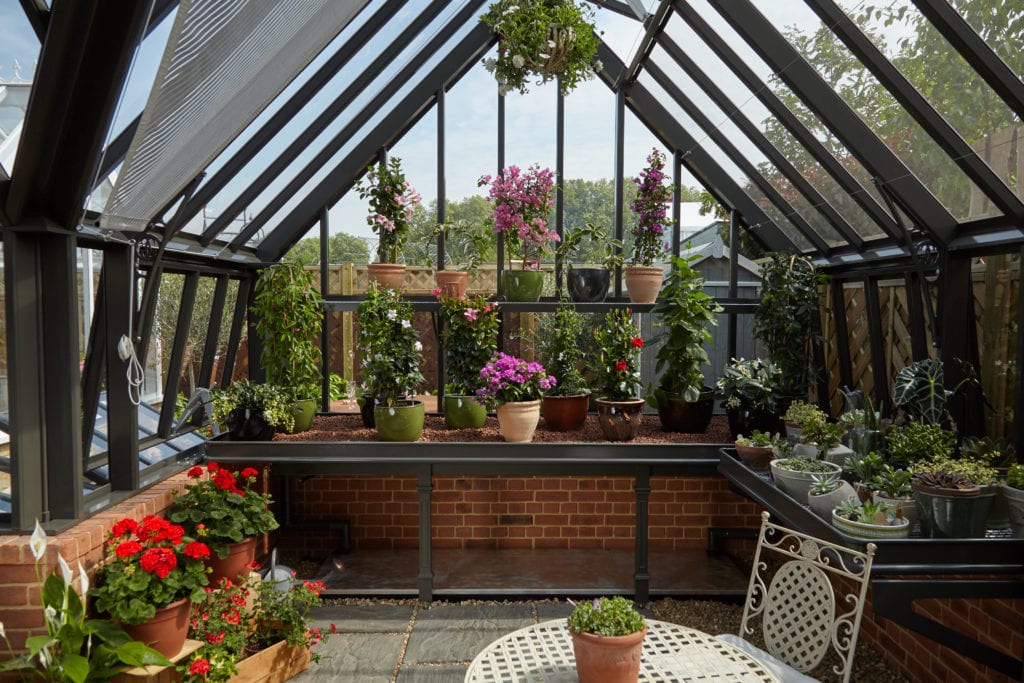
an interior of a glass greenhouse with plants
FAQs
Why do you need to increase humidity in a greenhouse?
Most plants thrive at 40-60% relative humidity, and air drier than that pulls moisture out of leaves faster than roots can replace it. Increasing humidity prevents wilting, crisp or browning leaves, slow growth, and tip burn. It keeps plants in their comfort zone so they can grow steadily.
How does humidity affect plants inside a greenhouse?
Low humidity dries leaves, curls tips, and stunts growth as plants lose water faster than they take it up. High humidity swings the other way, encouraging mold, rot, and water droplets that sit on leaves. Holding a middle range keeps foliage healthy and disease pressure low.
How does temperature affect humidity levels inside a greenhouse?
Warmer air holds more water vapor, so heating the greenhouse lowers the relative humidity reading even when the moisture content is unchanged. Cooler air holds less, which pushes relative humidity up. University of Connecticut extension notes the air’s water capacity doubles for every 20°F rise.
What causes greenhouse humidity to climb too high?
Excessive misting, poor airflow, dense foliage, and cool temperatures all let moisture build up. Cool air cannot hold as much vapor, so humidity spikes and condensation forms on glazing and leaves. Venting, fans, and reduced watering bring it back down.
What are some ways to reduce humidity in a greenhouse?
Open doors or roof vents to swap moist inside air for drier outside air, and add exhaust fans or circulation fans to keep air moving. Avoid overhead watering and excessive misting, water early in the day, and keep floors dry. Easing off the heater at night also lets trapped moisture escape.
Does grouping plants really raise humidity?
Yes. Plants release moisture as they transpire, so clustering several together pools that effect and lifts the humidity in their immediate area. Leafy growers and large tropicals give off the most. Just leave enough space for airflow so crowded foliage does not invite disease.
Ready to build the right environment from the ground up? A well-sealed, properly vented kit makes holding 40-60% humidity far easier than fighting a drafty structure. Browse our greenhouse kits for sale to find a frame and glazing that match your climate and your plants.




Leave a comment