How to Anchor a Greenhouse So It Survives Wind and Snow
An unanchored greenhouse is a sail. Wind gets under the base, lifts a corner, and the whole structure flips, taking your panels, your shelving, and a season of seedlings with it. The frame is light by design, so the only thing keeping it grounded is how well you tie it to the earth.
TL;DR: Anchor a greenhouse by setting it on a foundation that reaches below the frost line, bolting the frame to that base, then adding earth-anchor cables at the corners and sealing the covering. Frost can penetrate 15 to 18 inches in cold regions, so shallow footings heave and fail.
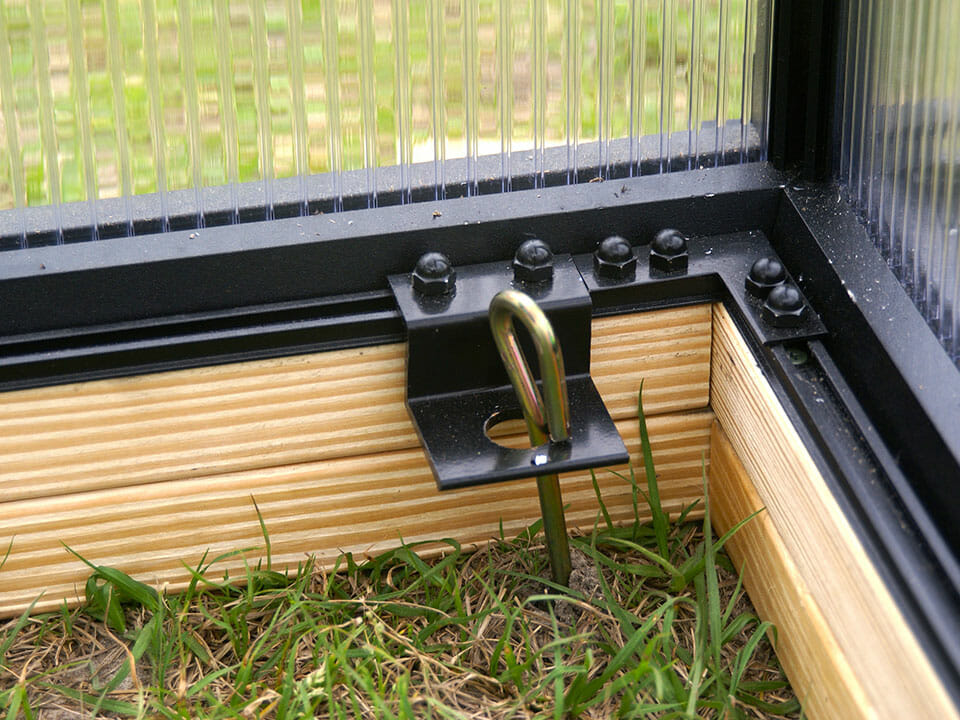
an image of a greenhouse anchor
How Do You Anchor a Greenhouse?
You anchor a greenhouse by combining three things: a foundation tied to the ground, a frame bolted to that foundation, and tensioned cables running to earth anchors. Frost heave is the hidden enemy here. NOAA’s National Centers for Environmental Information notes that foundations must account for how deeply soil freezes, because frost heave lifts and damages anything sitting too shallow.
Each layer covers a different failure mode: the foundation stops sliding and heaving, the bolted frame keeps walls from racking, and the cables resist uplift, the force that actually flips greenhouses. Skip one and you leave a weak point for a strong gust to find.
Step 1 - Pick a Wind-Smart Location
Choosing the right spot is the cheapest wind protection you will ever buy. Position the greenhouse where it gets at least 6 hours of direct sun, drains well, and sits behind a natural windbreak. A fence, hedge, or building on the windward side cuts gust pressure before it ever reaches your panels, which lowers the load every anchor has to hold. If you are still shopping, match a footprint from the greenhouse kits for sale to the windbreak you actually have.
Avoid wide-open, low-lying ground. Open exposure gives wind a running start, and low spots collect water that rots wood platforms and undermines footings. Look for a slightly elevated, well-drained site clear of debris, with power and water within reach. Good siting means every later step works less hard.
Step 2 - Build a Secure Foundation
A foundation that reaches below the frost line is the single most reliable anchor a greenhouse can have. Concrete footings, a compacted crushed-stone trench, or a posted wood platform all work, as long as the base resists both sliding and frost heave. In cold regions, frost commonly drives 15 to 18 inches into the ground (NWS Buffalo), so footings that stop short of that depth will lift over the winter.
Frost heave, the upward swelling of soil as groundwater freezes, can wrack and twist any structure built on footings that sit above the frost line. NOAA’s National Centers for Environmental Information uses the air-freezing index to estimate how deep frost penetrates, and notes that standard footings must reach below it. Recorded frost depths of 15 to 18 inches in northern winters confirm why shallow bases fail.
Concrete footings are the strongest base. Dig perimeter trenches 12 to 18 inches wide and 6 to 12 inches below your local frost line where the base plates will sit. Pour 4 to 6 inches of reinforced concrete using rebar or wire mesh, set anchor bolts every 4 to 6 feet before the concrete sets, and let it cure 5 to 7 days before building.
Crushed stone trades some strength for drainage. Dig a 12-inch perimeter trench, fill with 4 to 6 inches of gravel or pea gravel, and compact it firmly for a stable, level seat that still drains.
A wood platform suits sloped or soft ground. Sink 4x4 posts 2 to 3 feet into the earth every 4 to 6 feet, frame them with 2x6 or 2x8 beams, and sheath the top with exterior plywood to bolt the frame into. Whichever base you choose, get it dead level, since an out-of-square frame loads its anchors unevenly.
Step 3 - Assemble and Anchor the Frame
With the foundation set, the frame is what turns a pile of parts into a wind-resistant box. Build on a calm day, follow the kit instructions, and bolt the base plates and corner posts directly into the concrete, stone, or wood you prepared. Use concrete anchors, lag bolts, or wood screws spaced every 2 to 3 feet so no section of the base can lift independently. If you are still deciding what sits under the frame, our guide to the best floor for a greenhouse compares the common base options.
Two details separate a frame that holds from one that racks. First, add diagonal cross bracing on every wall; it turns four wobbly panels into a rigid shell that spreads wind pressure instead of folding one corner. Second, run the kit’s ratchet straps from frame to foundation anchors as you assemble, keeping everything square until the hardware is torqued. Then walk the perimeter and re-check every anchor point.
Step 4 - Add Ground Cables for Extra Hold
Ground cables are your insurance against uplift, the force that actually flips greenhouses. Drive heavy-duty earth-anchor screws 2 to 3 feet deep, about 4 feet out from each corner, then run galvanized steel cable from each top corner of the frame down to the anchor. Tension every cable with a turnbuckle until it sings, pulling the structure tight to the ground from all four sides.
For longer structures, the corners alone are not enough. Add mid-span cables along each sidewall so a gust cannot pry the middle of a long wall upward while the corners stay pinned. Re-check cable tension after the first hard storm and seasonally, since anchors settle and turnbuckles loosen.
Step 5 - Seal the Covering Against Wind
A rock-solid frame still fails if wind gets behind the covering, so the cover is the last anchoring layer. Attach poly film or panels per the kit instructions, then seal every edge where the covering meets the frame. Rigid panels resist wind far better than film; polycarbonate, in particular, bolts to the frame and shrugs off gusts that would balloon and tear a poly sheet.
The material you choose sets the ceiling on how much wind your greenhouse can take:
Covering Material
Wind Resistance
6 mil Poly Film
Moderate
8 mil Poly Film
Better
10 mil Poly Film
Good
Polycarbonate
Excellent
Acrylic
Very Good
If you are upgrading the shell for storm country, rigid polycarbonate greenhouse panels are the practical pick. Whatever you fit, seal the edges with closure strips and caulk wherever the covering meets the frame, and seal around every vent, louver, and fan. Wind finds any gap, so leave none.
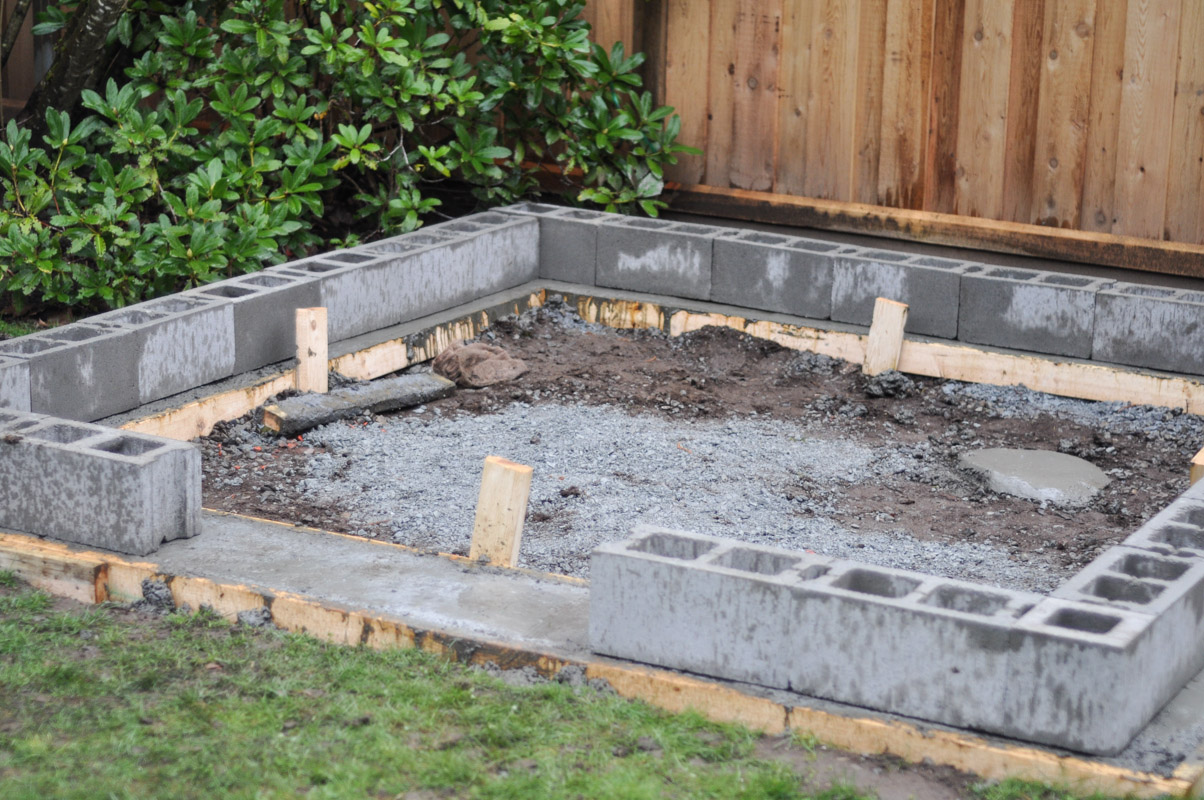
an image of a cinder block foundation being built for a greenhouse
Common Anchoring Mistakes to Avoid
Most anchoring failures trace back to a handful of repeat mistakes, and almost all of them are easy to dodge once you know them. The biggest is stopping the foundation above the frost line, which all but guarantees the base heaves and racks the frame over its first cold winter.
Watch for these in particular:
Footings too shallow for your climate. A base that does not reach below the local frost depth lifts unevenly as the ground freezes and thaws, twisting the frame out of square.
Skipping the corner cables. Bolts alone resist sliding but do little against uplift. Without tensioned earth-anchor cables, a strong gust can peel the structure off its base.
No diagonal bracing. Unbraced walls rack and fold under side loads. Diagonal bracing on every wall is what makes the shell rigid.
Loose or unsealed covering. Even small gaps let wind get behind the panels and pry. Seal every edge, vent, and fastener.
Building on a windy day. Half-assembled frames and loose panels are at their most vulnerable mid-build. Wait for calm weather and keep parts strapped down.
After any major storm, walk the structure for loose hardware, slack cables, and gaps. Catching a backed-out bolt early is far cheaper than rebuilding a collapsed wall.
a man drilling a greenhouse into the ground
FAQs
How deep should greenhouse anchors go?
Earth-anchor screws should be driven 2 to 3 feet deep, set about 4 feet out from each corner, so they hold against uplift even in saturated soil. Foundation footings should reach below your local frost line, which can mean 15 to 18 inches or more in cold regions. Deeper is better in sandy or loose ground.
Can wind really flip a greenhouse?
Yes, and it is the most common way they fail. Wind gets under the base and the covering, generating uplift that lifts a corner and rolls the structure over. Bolting the frame to a below-frost-line foundation and adding tensioned corner cables addresses the uplift that bolts alone cannot stop.
Do I need a concrete foundation to anchor a greenhouse?
Not always. Concrete footings are the strongest option, but a compacted crushed-stone trench or a posted wood platform can anchor a greenhouse well when built to the proper depth. The key is that whatever you choose reaches below the frost line and gives you something solid to bolt the base plates into.
How do I keep snow from collapsing my greenhouse?
Choose a rigid covering and a frame rated for your snow load, since heavy snow adds weight that a weak structure cannot carry. Clear snow promptly after big storms, especially off low-slope roofs, and keep vents sealed so wind-driven snow stays out. A well-anchored frame also resists the side loads that snow and wind combine to create.
Ready to Anchor Yours?
Anchoring is the difference between a greenhouse that lasts a decade and one that becomes yard debris in the first storm. Start with a foundation below the frost line, bolt and brace the frame, tension the corner cables, and seal the covering tight. Still picking a structure built to take weather? Our greenhouse buyer guide covers frame, panel, and size choices before you break ground.




Leave a comment