How Does a Greenhouse Work? The Science of Year-Round Growing
A greenhouse traps the sun’s heat by letting shortwave sunlight pass through the glazing, where it warms the soil, plants, and benches inside. The real reason it stays hot is simple: the enclosure stops that warmed air from rising and blowing away. Block the air from escaping, and the temperature climbs fast, even on a cold day.
TL;DR: Sunlight passes through glass or plastic and warms everything inside a greenhouse. The structure then keeps that heat by stopping warm air from convecting out. Reduced radiation loss through the glazing helps a little, but stopped airflow is the main reason a backyard greenhouse stays warm.
a visual of how greenhouses work
How Does a Greenhouse Work? (The Short Answer)
A greenhouse works by admitting sunlight and then trapping the warmed air inside the enclosure. Sunlight passes through the glazing, surfaces absorb it and heat the surrounding air, and the walls and roof keep that air from rising and escaping. The University of Alaska Fairbanks Geophysical Institute confirms the trapped, confined air is the main reason temperatures climb.
The closed structure is what does the heavy lifting. Outdoors, warm air near the ground rises freely into the open sky and carries its heat away. Inside a sealed greenhouse, that same warmed air has nowhere to go, so it pools under the roof and the temperature rises quickly.
Per the University of Alaska Fairbanks Geophysical Institute, “In a greenhouse, this mixing is confined to the layer of air trapped under the roof, so there is a much smaller mass to be heated.” A shallow pocket of trapped air heats far faster than the open atmosphere above bare ground does.
The Greenhouse Effect, Step by Step
The greenhouse effect inside a structure happens in four stages: sunlight enters, surfaces absorb it, those surfaces warm the nearby air, and the enclosure stops that warm air from escaping by convection. The University of Alaska Fairbanks notes the confined air pocket is small, so it heats quickly compared to the open sky over a garden.
Here is the sequence in plain terms.
Step 1: Shortwave sunlight enters. Visible light passes through the transparent walls and roof. Unlike an open garden, the greenhouse holds onto what comes in instead of letting it bounce straight back to the sky.
Step 2: Surfaces absorb the light and heat up. Sunlight strikes the plants, soil, floor, and benches. Those objects absorb the energy and warm up, then pass that warmth to the thin layer of air touching them.
Step 3: The warmed air would normally rise and leave. Over open ground, this heated air floats up into the deep atmosphere and is replaced by cooler air. That constant turnover is why a sunny field never gets as hot as a closed car.
Step 4: The enclosure stops the air from escaping. Inside a greenhouse, the warm air is capped under the roof. It cannot convect away, so it builds up and the temperature climbs. This is the part most people skip.
Here is where the popular explanation goes wrong. You have likely heard that “the glass traps infrared radiation.” That line is an oversimplification. A physical glass or polycarbonate greenhouse stays warm mostly because the enclosure blocks convection, the warm air physically cannot get out. Reduced radiative loss through the glazing is a real but secondary effect. The University of Alaska Fairbanks puts it bluntly: a gardener’s greenhouse does not work the way the old “traps infrared” story claims.
That naming confusion is worth untangling, because the planetary greenhouse effect is a genuinely different mechanism that shares the name.
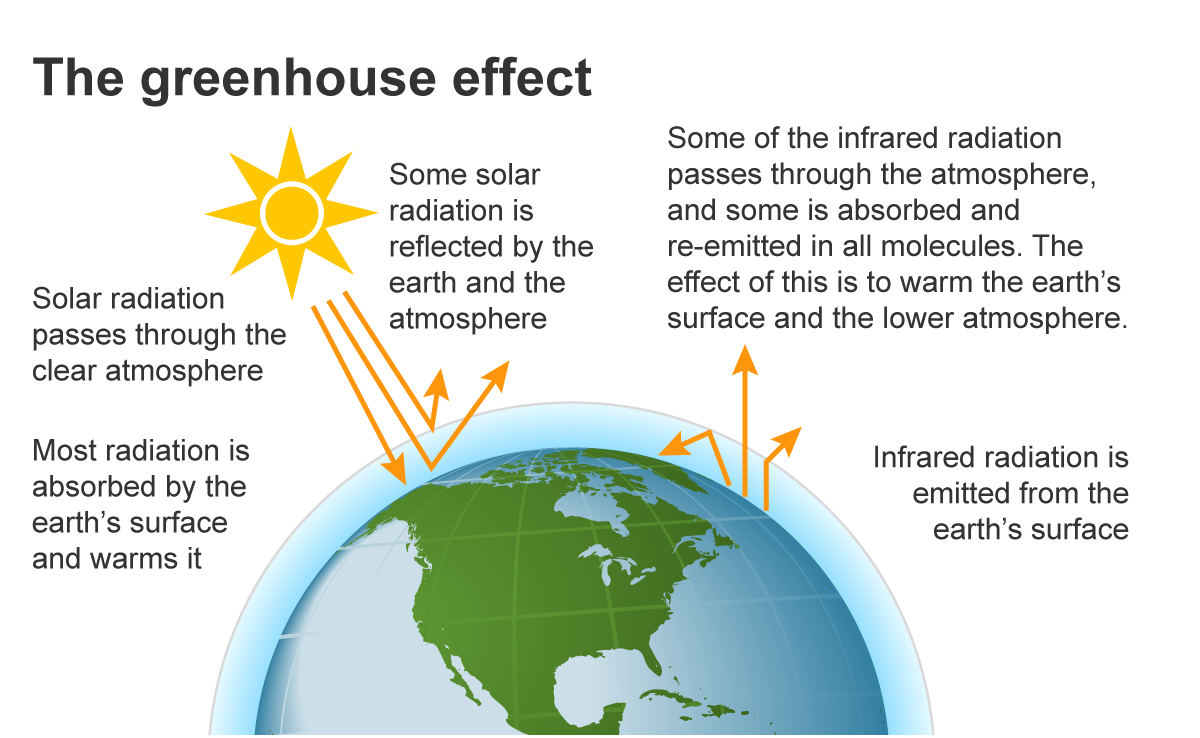
NASA explains the atmospheric version this way: “Greenhouse gases in Earth’s atmosphere trap some of the heat from the sun. It prevents the heat from escaping back into space at night.” Up in the sky, gases like carbon dioxide and water vapor absorb and re-emit infrared, so that planetary effect truly is radiative. Your backyard greenhouse is not. It relies on stopped airflow, not gas chemistry.
So the two ideas are related by name but not by mechanism. The atmosphere warms the planet by trapping infrared with gases. A backyard greenhouse warms its interior by trapping air with walls.
a visual of the greenhouse effect
How Glazing Traps Heat
Glazing earns its keep by letting sunlight in while slowing heat loss. A solid, sealed panel of glass or twin-wall polycarbonate stops air from leaking out, which is what holds the warmth. Light transmission and durability vary by material, so the glazing you pick shapes both how bright and how warm your greenhouse runs across seasons.
The glazing has two jobs that pull against each other. It must transmit as much sunlight as possible during the day, then insulate the interior so heat does not bleed out at night. Single-pane glass transmits beautifully but insulates poorly. Twin-wall and triple-wall polycarbonate trades a little clarity for a trapped layer of air that slows heat loss. Here are the common options at a glance.
Material
Transmittance
Durability
Cost
Glass
Very high
Durable but can shatter
High
Polycarbonate
High
Impact resistant
Moderate
Polyethylene
Moderate
Shorter lifespan
Low
Polyvinyl
Moderate
Prone to degradation
Moderate
Fiberglass
High
Durable, handles hail
High
If you want maximum light and a classic look, a glass greenhouse delivers the highest transmittance. If you want better insulation and impact resistance for tough weather, twin-wall and triple-wall polycarbonate panels are the practical choice, since the trapped air layer between walls slows heat loss while still passing plenty of light.
Controlling Temperature and Humidity
A greenhouse that traps heat all day will overheat without active cooling, so temperature and humidity control matter as much as warming. Vents, exhaust fans, shade cloth, and thermal mass keep conditions in the range plants want. On a sunny afternoon, a closed greenhouse can run far hotter than the air outside, which is exactly why ventilation is not optional.
The same trapped-air principle that warms the greenhouse can cook your plants if you ignore it. Managing the interior comes down to a few moving parts.
Vents and windows let hot air out. Roof vents and side louvers let the hottest air escape while cooler outside air flows in. Automatic openers with thermostat or wax-piston controls handle this without you standing watch.
Fans and shade cloth fight peak heat. Exhaust fans pull hot air through, and shade cloth or a whitewash coat cuts intense midday sun so plants do not scorch.
Thermal mass steadies the swings. Water barrels, stone, and a concrete or gravel floor soak up heat during the day and release it slowly at night, flattening the highs and lows.
Humidity gets vented, not ignored. Trapped, humid air invites fungal and bacterial disease. Opening vents swaps damp air for drier air and keeps moisture in a healthy band.
How easily your greenhouse holds or sheds heat ties back to the glazing on the frame. Our guide to the best material for a greenhouse covers how light needs, climate, lifespan, and budget should steer that pick.
a side by side photo of a greenhouse vent and side louver
Design Choices That Retain More Heat
Beyond the glazing, a handful of design choices push a greenhouse through cold nights and dim winter stretches. Thermal mass, insulating curtains, supplemental heat, and smart placement all stack warmth on top of passive solar gain. Thermal mass alone, in the form of a stone or concrete floor, can hold daytime heat and feed it back overnight.
Each of these adds a margin of warmth so plants stay protected when the sun is not doing the work.
Thermal mass stores daytime heat. A concrete or gravel floor, water containers, and stone walls have a high heat capacity. They absorb heat all day and radiate it back slowly after dark, keeping interior temperatures elevated.
Thermal or energy curtains add an insulating layer. Curtains pulled across overnight trap rising warm air against the canopy and cut radiant loss through the glazing. During the day they can diffuse harsh light.
Supplemental heating covers the gaps. Passive solar handles most of the load, but propane heaters, electric units, or hot-water piping carry the greenhouse through deep cold and long sunless spells.
Location maximizes solar gain. Placement is free heat. A south-facing spot with a windbreak captures the most winter sun while blocking the cold gusts that strip warmth away. Our guide to what direction a greenhouse should face covers how to position yours for the strongest year-round gain.
Why Plants Grow Better in a Greenhouse
Plants thrive in a greenhouse because you control the variables that limit growth outdoors: temperature, humidity, light exposure, water, and pest pressure. The enclosed, warmed environment extends the season at both ends and shields tender crops from frost, wind, and sudden cold snaps. With those swings tamed, plants put more energy into steady growth instead of survival.
That control is also why a greenhouse needs attentive care. The same sealed environment that protects plants can concentrate humidity and pests if you let it. A few habits keep your crops healthy.
Ventilate daily to refresh the air and hold off fungal and bacterial disease.
Use shade cloth or whitewash in hot months to ease light intensity and heat stress.
Watch humidity and run vents or fans to stay in your crop’s ideal range, since damp, still air encourages disease.
Space plants well apart so air moves freely. Overcrowding breeds competition for light and gives pests cover.
Sanitize tools, pots, and trays to stop pathogens from hopping between plants.
Scout for pests like whiteflies, aphids, and spider mites, which love warm enclosed air, and act before they multiply.
Water early so leaves dry before nightfall. Drip irrigation keeps foliage dry and roots fed.
Rotate plantings between beds each season to break disease cycles in the soil.
Stay consistent with ventilation, sanitation, pest scouting, and moisture monitoring, and your greenhouse rewards you with healthier plants and longer harvests than open ground can give.
an actual product image of the Exaco Janssens Royal Victorian Greenhouse VI 36
FAQs
Does a greenhouse really trap infrared radiation?
Not mainly. The popular “glass traps infrared” line is an oversimplification. A backyard greenhouse stays warm mostly because the enclosure stops warmed air from convecting away. Reduced radiative loss through the glazing helps, but it is a secondary effect, not the main driver.
Is a backyard greenhouse the same as the planetary greenhouse effect?
They share a name but work differently. The atmospheric greenhouse effect is radiative: gases like carbon dioxide and water vapor absorb and re-emit infrared heat, per NASA. A backyard greenhouse relies on trapped air that cannot rise and escape, not on gas chemistry.
Why does a greenhouse get so hot even in cool weather?
Sunlight warms the surfaces inside, and the sealed structure stops that heated air from rising and leaving. With the air capped under the roof, a small pocket heats quickly, so the interior can run far warmer than the air outside even on a chilly, sunny day.
Do I need to heat a greenhouse in winter?
It depends on your climate and crops. Passive solar gain, thermal mass, and insulating curtains carry many greenhouses through mild winters. In hard freezes or long cloudy stretches, supplemental propane, electric, or hot-water heating keeps tender plants alive when the sun cannot keep up.
Which glazing keeps a greenhouse warmest?
Twin-wall and triple-wall polycarbonate insulate best because the trapped air layer between walls slows heat loss. Single-pane glass transmits more light but loses heat faster. The right pick balances how much light, insulation, and impact resistance your climate and plants demand.
Ready to put the science to work in your own backyard? Browse our full range of greenhouse kits for sale to find a sealed, season-extending structure sized for your space and climate, and start growing well past the first frost.





Leave a comment