To paint a gazebo, you wash and dry the structure, sand glossy or peeling areas with 80-120 grit paper, prime any bare wood with an acrylic latex primer, then paint from the top down: roof and ceiling first, railings next, siding last. Two thin coats of quality exterior paint hold up far better than one thick one. The whole job runs a weekend for an average 10x10 structure, and a good finish buys you four to seven years before the next full repaint.
The hard part of a gazebo isn’t the painting. It’s the geometry. Spindles, friezes, overhead rafters, and tight corners punish anyone who skips prep or rushes the order of operations. Get the sequence right and you avoid drips on freshly coated railings, lap marks on the siding, and the misery of cutting in around dried paint. This guide walks you through materials, prep for both new and weathered wood, the painting order, and a maintenance cadence that keeps the finish intact.
TL;DR: Sand with 80-120 grit, prime bare wood with acrylic latex primer, then paint top-down (roof, railings, siding) in two thin coats, keeping a wet edge. Repaint every 4-7 years and reseal raw wood every 1-2 years. Per the EPA, any home or structure built before 1978 may contain lead paint, so test before scraping.
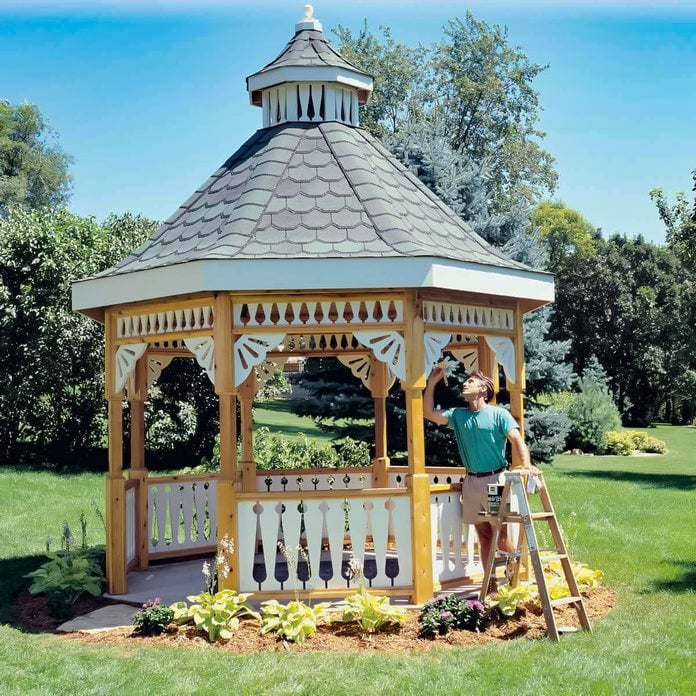
man with a hat painting a gazebo
What Materials Do You Need to Paint a Gazebo?
You need exterior paint, primer, two brush types, a roller with an extension pole, and prep tools (scraper, sandpaper, caulk, tape, drop cloths). Buy quality exterior acrylic latex paint rather than interior leftovers: it flexes with wood as the seasons swell and shrink it, and it resists UV fade and mildew far longer. Stock everything before you start so the job runs without a hardware-store interruption mid-coat. And before you buy any of it, take a hard look at whether the structure is worth recoating at all: our gazebo buying guide walks through how to judge condition and remaining lifespan so you don’t paint over rot you should be replacing.
Here’s the working list:
Exterior paint and primer. Use a paint rated for outdoor use. Acrylic latex gives the best adhesion and flexibility on wood. Pair it with an exterior acrylic latex primer for any bare wood.
Brushes. An angled sash brush (2 to 2.5 inch) handles spindles, trim, and cutting in. A wider flat brush covers broad rails faster.
Roller and extension pole. A 3/8 or 1/2 inch nap roller covers siding and ceiling panels quickly; the pole saves your shoulders on the roof.
Prep gear. Wire brush, putty knife or scraper, 80-120 grit sandpaper, exterior wood filler, exterior caulk, and painter’s tape.
Drop cloths. Protect plants, decking, and any furniture below.
How Do You Prep a Gazebo Before Painting?
Prep depends entirely on whether the wood is new or weathered. New, never-painted wood needs a light sand, a wash, and a primer coat on bare areas, then it’s ready. A weathered gazebo with failing paint needs the full treatment: scrape, sand, repair, and spot-prime. Paint only bonds as well as the surface under it, so this stage decides how long the job lasts.
For a new gazebo, the path is short. Inspect for damaged boards, gaps, or protruding nails and fix them. Lightly sand all surfaces so primer grips. Wash off mill glaze and dust, let it dry fully, then prime the bare wood with acrylic latex primer.
A weathered gazebo takes more work, and one rule comes first. The EPA notes that any structure built before 1978 may contain lead-based paint, and scraping or sanding it without precautions releases dust you don’t want in your yard or lungs. Test old paint before disturbing it and follow lead-safe work practices if it tests positive. Once that’s settled, scrape every bit of loose, flaking paint with a wire brush and putty knife. Sand glossy and rough spots with 80-120 grit to give the new coat a key. Fill cracks and nail holes with exterior wood filler, let it cure, and replace any board that’s soft or split. Caulk seams and corners with exterior caulk. Then pressure-wash or hand-wash the whole structure and let it dry for a day or two before primer.
man painting a hexagon gazebo
Step-by-Step: How to Paint a Gazebo
Paint a gazebo from the top down so gravity works for you, not against you: roof and ceiling first, then railings and trim, then siding last. This order means any drips land on surfaces you haven’t finished yet, and you never lean a ladder against wet paint. Plan on two thin coats per surface, letting each dry fully per the label before the next.
Step 1: Mask Off and Protect
Tape off lights, outlets, hardware, and anything you don’t want painted. Cover nearby plants, decking, and furniture, and lay drop cloths under the work area to catch drips.
Step 2: Prime Bare Wood
Apply exterior acrylic latex primer to all bare wood and freshly repaired spots in a thin, even coat. Spot-prime any patched vinyl or metal as needed. Let the primer dry fully before any color goes on.
Step 3: Paint the Roof and Ceiling
Work the roof and overhead ceiling panels first. Use a brush on an extension pole to reach without overstretching on the ladder. On a roof surface you’ll walk or sit near, a textured anti-slip additive mixed into the paint adds grip and reduces the chance of a slip; these grit additives are sold alongside exterior paint at most paint stores. Apply in smooth strokes and skip the thick globs that drip.
Step 4: Paint the Railings, Spindles, and Trim
Switch to the angled sash brush for control around spindles, friezes, and molding. Paint railings in vertical sections to avoid runs, and brush wide trim first, then roll it quickly for an even finish. Keep coats thin so paint doesn’t sag in the corners.
Step 5: Paint the Siding and Walls
Roll the siding and walls with the 3/8 to 1/2 inch nap roller, or spray if you have the gear. Work top to bottom and maintain a wet edge, overlapping each pass into the still-wet previous one so you don’t leave lap marks where coats dried at different times. On a wood-frame gazebo, paint with the grain on each board for the cleanest finish.
Step 6: Finish and Inspect
Once the final coat cures, inspect closely and touch up any thin spots or drips. Pull the tape and masking while the paint is firm but not brittle. For extra weather protection on high-wear surfaces like steps, a clear exterior sealer over the cured paint helps. Clean your brushes and rollers so they’re ready for the next job.
hexagon gazebo painted maroon and gray
How Do You Maintain a Painted Gazebo?
A painted gazebo needs a full repaint every 4 to 7 years, with annual touch-ups in between and a reseal of any exposed wood every 1 to 2 years. Climate drives the timeline: harsh sun, freeze-thaw cycles, and constant moisture push you toward the shorter end, while a sheltered structure in a mild climate stretches longer. Catching small problems before they spread is what keeps the 4-to-7-year window from collapsing into a 2-year emergency.
Walk the structure each spring. Touch up any chipped or worn paint before water gets behind it. Scrub off mold, mildew, or moss as soon as you spot it, since those hold moisture against the wood and accelerate rot. Reseal or recoat any exposed or end-grain wood every 1 to 2 years for the best protection, and periodically rinse vinyl or metal sections before a recoat. A few hours of spring maintenance pays for itself many times over, and it’s a big part of why some gazebos last 20 years while others rot out early.
FAQs
Can you paint a metal gazebo?
Yes. Sand off any rust and scuff glossy areas with sandpaper or steel wool, then apply a rust-inhibiting metal primer followed by an exterior paint rated for metal. Spray application gives the smoothest finish on metal frames, though a foam roller and brush also work.
How often should you repaint a gazebo?
Plan on a full repaint every 4 to 7 years for a wood gazebo, depending on sun, moisture, and freeze-thaw exposure in your climate. Touch up chips and worn spots annually, and reseal exposed wood every 1 to 2 years to stretch the interval between full repaints.
Should you paint or stain a cedar gazebo?
Stain is usually the better call for cedar. It soaks in, shows the grain, and won’t peel the way film-forming paint does as the wood moves, so touch-ups blend instead of leaving hard edges. Choose a semi-transparent or solid exterior stain. Paint cedar only if you specifically want an opaque color, and prime it first.





Leave a comment