What to Do With Fire Pit Ashes? 10 Ways to Use Fireplace Ash
Wondering what to do with fire pit ashes once the fire dies down? Don’t bag them for the trash. Wood ash is alkaline and packed with potassium, calcium, and magnesium (Michigan State University Extension), which makes it a genuinely useful resource around the yard and home: a free fertilizer, pest barrier, cleaner, and de-icer. Here’s how to handle ashes safely, then 10 practical ways to put them to work.
TL;DR: Cooled wood ash is alkaline and rich in potassium, calcium, and magnesium, so it works as a garden fertilizer, compost booster, slug deterrent, mild abrasive cleaner, and ice traction aid. Always cool ashes for at least 24 hours in a metal container before handling, keep them 10 feet from anything combustible, and skip acid-loving plants like blueberries.
Key Takeaways
Wood ash is alkaline and contains potassium, calcium, and magnesium, nutrients that benefit many garden plants and compost.
Cool ashes completely (24+ hours) in a metal container before doing anything with them; warm ash can reignite.
Use ash to fertilize soil, boost compost, deter slugs and snails, scrub metal and glass, and add traction on ice.
Go light, and avoid acid-loving plants (blueberries, azaleas, rhododendrons); too much ash raises soil pH too far.
Handle and Store Fire Pit Ashes Safely First
Before ashes go anywhere, treat them as if they’re still hot, because they often are. Embers can stay live long after the flames are gone, so wait at least 24 hours after your last fire before handling. Scoop the cooled ash into a metal bucket or other non-flammable container, never plastic, and if there’s any doubt about temperature, dampen it with water to speed cooling.
Keep that container at least 10 feet from your home, deck, and anything combustible like dry leaves until you’ve reused or disposed of the ash. Storing ashes correctly is the single most important step here: most ash-related fires trace back to “cooled” ash that wasn’t actually cold.
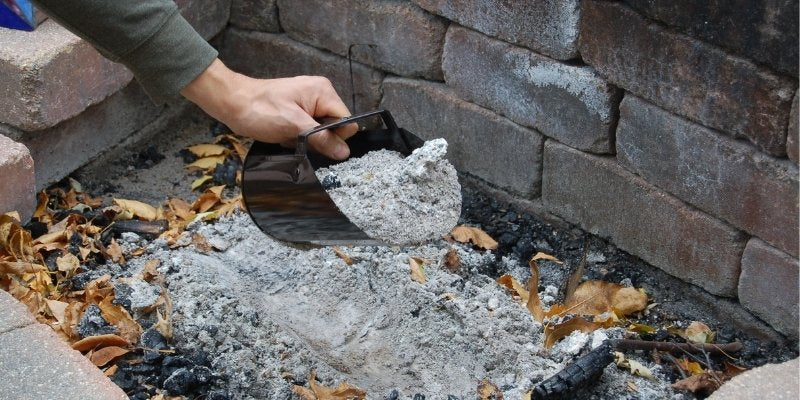
A hand using a metal scoop to clean ash and debris from a stone fire pit
10 Ways to Reuse Fire Pit Ashes
From the vegetable bed to the driveway, wood ash earns its keep. Here are ten uses, with the one caveat that runs through all of them: a little goes a long way.
1. Fertilize garden soil
Wood ash supplies calcium, potassium, and trace minerals, so a thin layer raked into beds acts as a free soil amendment. It also raises the pH of acidic soil, which most flowers and vegetables appreciate. Sprinkle lightly and till in gently rather than dumping it in one spot.
2. Boost your compost pile
A light dusting of ash in the compost bin adds calcium that offsets the acids from decomposing material, helping regulate pH. The potassium and carbon also feed the microbes and worms breaking everything down. Keep it to a sprinkle per layer, not a shovelful.
3. Make homemade soap
With some basic chemistry, hardwood ash can produce lye for soap-making. The traditional method boils ashes in soft water, then collects the alkaline lye that rises to the top. Combined with oils like olive or coconut, that lye saponifies into handmade soap. It takes practice, and gloves, but it works.
4. Deter slugs and snails
Gardeners have used wood ash as a pest barrier for generations. The dry, alkaline grit irritates soft-bodied slugs and snails and disrupts their scent trails, so a light ring around vulnerable plants keeps them at bay. Refresh it after rain, and don’t overdo it or you’ll push the soil pH too high.
5. Mix a natural pest spray
Ash also works blended into water. Stir 1–2 tablespoons of ash into water for a basic insecticidal solution, or steep garlic and mint in ash water overnight for extra punch. A drop of mild soap helps it cling to leaves. Always test on a few leaves first to make sure the plant tolerates it.
6. Scrub metal and glass
The gritty texture and alkaline pH make ash a surprisingly good abrasive cleaner. A paste of ash and water cuts grease and burnt-on grime off grill grates, stainless appliances, glass, and patio furniture. Rub it on with a damp cloth, then rinse thoroughly.
7. Absorb driveway oil spills
Got an oil stain from a leaky car? Cover the slick with cooled wood ash and let it soak up the petroleum. Once the ash darkens with absorbed oil, sweep it up and bag it. It’s a cheap, no-chemical way to keep stains from setting into concrete.
8. Add traction on icy walkways
Ash contains potassium salts that help with grip on frosty steps and paths. It won’t melt thick ice the way salt does, but a light coating gives you better footing than bare, slick concrete, and it won’t corrode metal or harm plants the way de-icing salt can. Sweep up the excess once things thaw.
9. Help control a fire
A bucket of dry ash beside the wood-burning fire pit is a handy backup for smothering flames when you’re done or in a pinch. Tossed over logs, ash cuts off the fire’s oxygen and damps it down fast. Keeping a filled ash bucket nearby before you light up is a smart, old-school habit.
10. Offer chickens a dust bath
If you keep backyard chickens, a tray of fine ash gives them a dust-bathing spot that helps clean feathers and smother mites and other external parasites. Chickens actually prefer ash to plain sand. Make sure they have clean water nearby afterward.
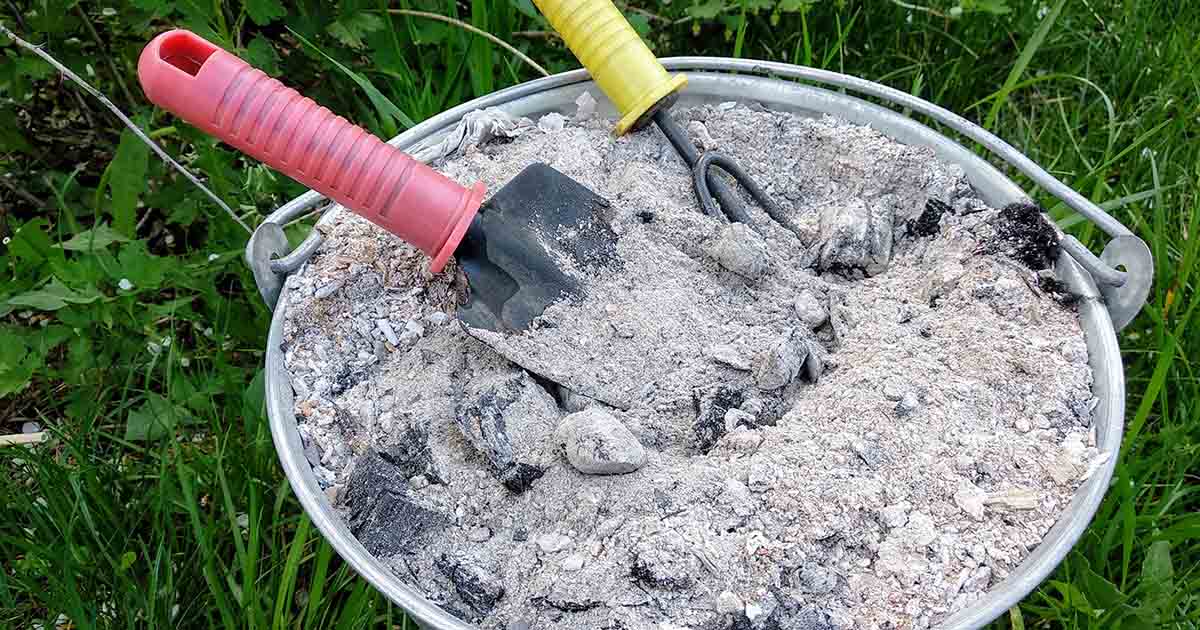
A metal bucket filled with ash and charred remains with a small shovel resting on top
Which Plants Love Wood Ash, and Which to Avoid
Here’s the part most guides skip. Wood ash raises soil pH, so it helps plants that like neutral-to-alkaline ground: tomatoes, beans, peas, garlic, and most lawns respond well to a light application. It’s also useful where your soil test shows low potassium.
But ash is the wrong move for acid-loving plants. Keep it away from blueberries, azaleas, rhododendrons, blue hydrangeas, and potatoes, where raising pH causes problems. The safe rule: test your soil first, apply thinly, and never use ash from charcoal briquettes, painted wood, or pressure-treated lumber on anything you’ll eat.
How to Dispose of Leftover Ashes
If you still have ash after reusing what you can, get rid of it safely:
Reuse first. Find a job for the ash before it becomes trash; most of the uses above need only a small amount.
Cool fully, give it 48 hours. Let ash sit in the metal container for at least two days before disposal, since latent embers are the main hazard.
Bag and bin, or check local rules. Cooled ash can usually go in household trash, but some municipalities have specific ash policies, so confirm locally if you’re unsure.
Don’t Waste the Ash
The next time you clean out the pit, look at that pile of ash as a resource instead of a chore. A thin scatter feeds the garden, a paste scrubs the grill, and a bucket by the fire keeps you safer. Just let it cool completely, go light, and keep it off the acid-loving plants, and those leftovers from last night’s fire end up earning their keep. Cleanup gets easier from the start, too: what you put in the bottom of the pit on a concrete patio shapes how much ash and residue you deal with later.
A backyard fire area with a round fire pit and two orange chairs surrounded by plants
FAQs
Are fire pit ashes good for the garden?
Yes, in moderation. Wood ash adds potassium, calcium, and magnesium and raises pH, which benefits many vegetables and lawns. Apply a thin layer and avoid acid-loving plants like blueberries. Only use ash from clean, untreated wood, never from charcoal, painted, or pressure-treated wood.
Is fire pit ash good for your lawn?
It can be. A light dusting of wood ash adds potassium and can sweeten acidic lawn soil, encouraging healthier grass. Test your soil first, and if it’s already neutral or alkaline, skip the ash so you don’t push the pH too high.
Is fire ash good for tomatoes?
Tomatoes generally tolerate and even benefit from a light application, since they like the calcium (which helps prevent blossom-end rot) and the potassium. Work a small amount into the soil rather than piling it against the stems, and don’t overdo it.
Can wood ash really clean things?
Yes. Mixed with water, wood ash forms a mild lye and a gentle abrasive that cuts grease on grills, glass, and metal. Wear gloves, since the alkaline paste can irritate skin, and rinse surfaces well afterward.
Get the Most From Every Fire
Reusing ash is one of those small backyard habits that pays off all year: richer compost in spring, fewer slugs in summer, safer footing in winter. Handle it safely, use it lightly, and you turn last night’s fire into next season’s garden.




Leave a comment