Complete Guide: Arranging Lava Rocks on a Gas Fire Pit
Arranging lava rocks around your gas fire pit turns an ordinary backyard into a warm, inviting gathering spot, with the flames reflecting beautifully off the colorful volcanic stone. But arranging them well takes a little know-how. You have to balance airflow, heat distribution, and appearance. Follow these tips to do it right.
TL;DR: Use lava rocks 1 to 3 inches in size and blend sizes for even heat. Lay a 1-inch gravel base, set the largest rocks at the outer edge and smaller ones to the center, and leave 2 to 3 inch gaps for airflow to the burner. Cover the pan lightly but never bury the burner, and replace rocks every 1 to 2 years.
Key Takeaways
Choose lava rocks between 1 and 3 inches for most fire pits. Blended sizes heat effectively and look textured. Buy extra, since too little rock looks uneven.
Position rocks in circular rings, geometric patterns, or abstract groupings to add style. Alternating black and red rocks creates striking contrast.
Replace deteriorating lava rocks every 1 to 2 years. Cracks, heavy chipping, soot buildup, and fading all mean it is time to change them.
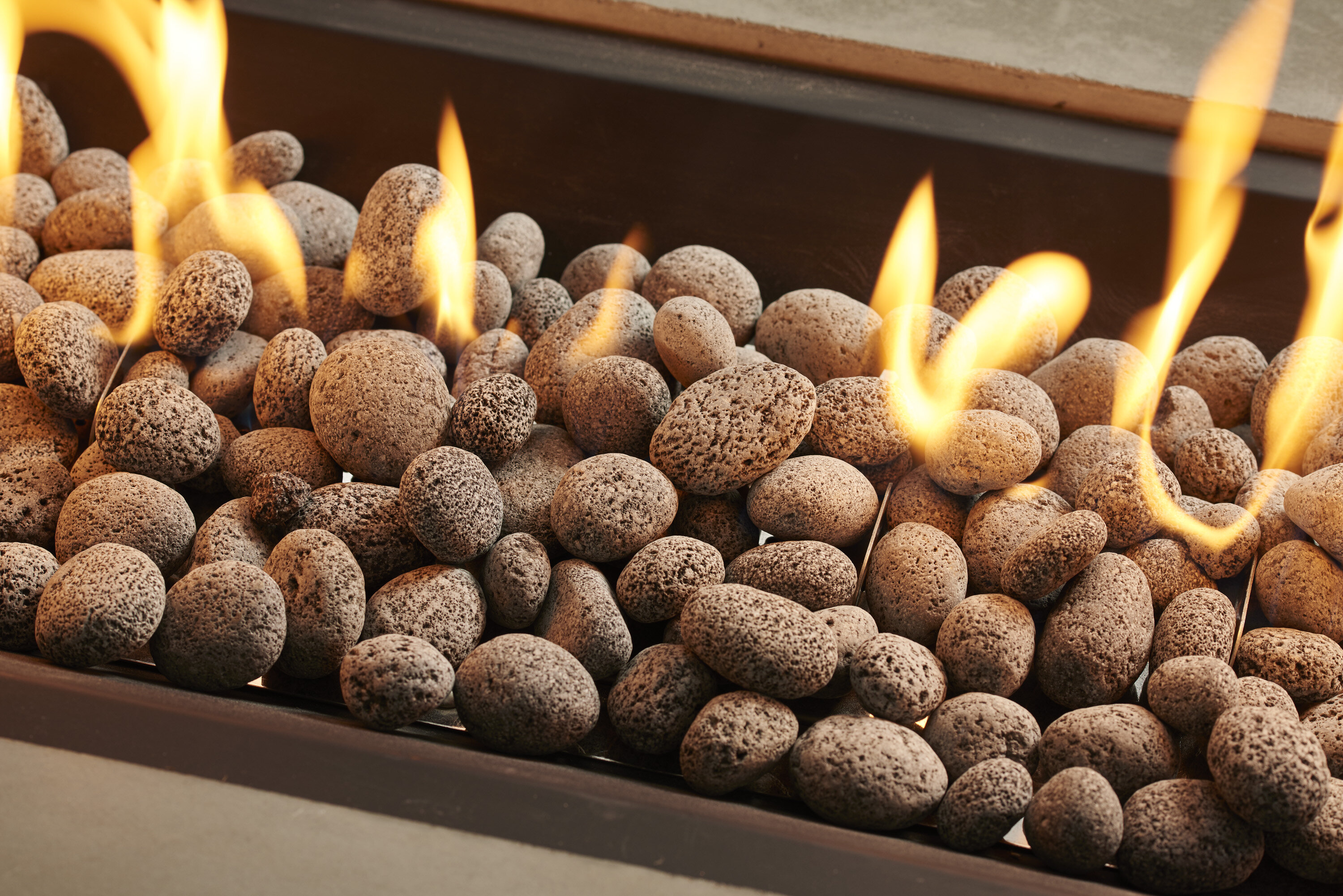
Flames rising from a gas fire pit filled with lava rock and fire glass
Equipment You Need
Before you start, gather your supplies and take basic safety precautions. Proper setup matters when adding lava rocks to a gas fire pit. You will want:
Bag(s) of lava rocks
Heat-resistant gloves
A metal poker or tongs
A soft brush (for cleaning)
A fire extinguisher
A propane tank (if needed)
Preparing the Gas Fire Pit
Good preparation is a must before placing any rock.
Clean Out Old Lava Rocks
If you are replacing existing rocks, empty out the old material. Use a soft brush to gently clean the fire pit floor and walls, removing soot and debris that could impede ventilation.
Inspect the Gas Burner
Examine the propane or natural gas burner, igniter, tubing, and connections. Look for leaks, breaks, blockages, or corrosion, and fix any issues before adding new rock.
Choosing the Right Lava Rocks
With so many options, picking the best lava rocks can feel confusing. Keep these points in mind.
Types of Lava Rock
The two most common types are basalt and andesite, both formed from volcanic eruptions.
Basalt is a very dark, charcoal-colored rock with a smooth, fine-grained texture.
Andesite comes in dark gray or brown shades and is slightly coarser and more porous than basalt.
Both work well in gas fire pits, but andesite tends to cost a little less while offering good heat properties.
Choosing the Right Size
Lava rock ranges from quarter-inch pieces up to 6 inches or larger. The size you choose affects three things:
Appearance. Smaller rocks look neat and uniform; larger rocks add rustic texture. A blend gives visual variety.
Airflow. You need enough space between rocks for proper airflow to the burner. Too little space can starve the oxygen supply.
Heat distribution. Varied sizes spread warmth effectively, with larger bottom rocks storing heat and smaller top rocks dispersing it.
Use this chart as a guide:
Fire Pit Diameter
Recommended Lava Rock Size
Small (under 3 ft)
1/4 to 1 inch pieces
Standard (3 to 5 ft)
1 to 3 inch pieces
Large (over 5 ft)
3 to 6 inch pieces
How Much Lava Rock You Need
Use this formula to estimate the amount of rock to buy:
Diameter x Diameter x Depth, divided by 24 = pounds of lava rock needed.
Buying a little extra is wise, since too little rock looks sparse. Any leftover stone works well along pathways, gardens, or retaining walls. The base layer matters too: just as you would when deciding what to put in the bottom of a fire pit, use a clean, non-combustible drainage layer beneath the rock.
A lit rectangular concrete fire pit filled with lava rock on a mountain patio
How to Arrange Lava Rocks on Your Gas Fire Pit
Skillful arrangement turns a basic gas pit into an eye-catching focal point. Follow these steps:
Clean out old debris and check components for any damage needing repair.
Cover the fire pit floor with a 1-inch layer of crushed gravel or sand for drainage, smoothed level.
Position the largest lava rocks around the outer edges first, then increasingly smaller ones toward the center.
Leave a 2 to 3 inch gap between rocks for ample airflow to the burner.
Top-dress the center with pea gravel or small pieces to finish a smooth surface and fill gaps.
Ignite the burner according to its instructions once the rocks are placed, and enjoy.
Different Ways to Arrange Lava Rocks
Get creative with the positioning to create stunning designs.
Circular Ring Formation
For a polished look, arrange your rocks in concentric circles from the center out. Place the largest rocks around the outermost edge, then build inward with progressively smaller rings, leaving about 3 inches between each ring. Mound pea gravel or small pebbles around the burner at the center. The result is a neat, rippled pattern with multidimensional appeal.
Geometric Pattern
For a modern, structured look, select rocks with flat surfaces that stand upright. Position the first few in a diamond or square around the burner, then expand outward, filling gaps with small pebbles. Alternating black and red rocks delineates the lines for striking contrast.
Sculptural Groupings
Think outside the box by building small 3D structures: mini volcano-shaped mounds, propped-up towers, or low walls of flat rock to divide zones within the pit. Combine shapes and sizes to design one-of-a-kind decorations.
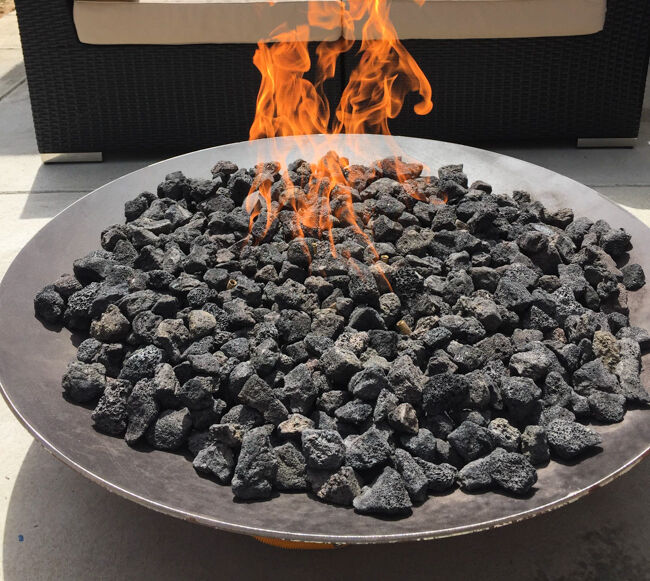
Flames flickering above black lava rocks in a round metal fire pit
Why Are My Lava Rocks Popping?
Popping or cracking almost always means trapped moisture. Lava rock is porous, so rain or even humidity can soak into it. When you light the burner, that water flashes to steam and the rock can pop or, in extreme cases, burst. To prevent it, let rocks dry completely before use, never light a pit with wet rock, and only use stone rated for fire pits. If popping starts after rain, shut the pit off and let the rocks dry out before relighting.
When to Replace Lava Rocks
Lava rocks are durable, but years of weather and extreme heat eventually wear them down. Signs they need replacing include:
Visible cracks, chips, or fragility
Excessive small pieces and powder from fracturing
Soot staining over more than 30% of the surface
Loss of color vibrancy
Replacing rocks every 1 to 2 years keeps them in optimal condition, and budgeting for the occasional refresh saves money over repairing damage later.
Final Words
Arranging smooth lava rock around the perimeter of your gas fire pit creates a welcoming focal point in any backyard. The stone withstands very high temperatures, retains heat well, and provides excellent drainage, and its earthy hues reflect the flickering flames beautifully. For extra effect, mix in distinctive shapes or some colorful fire glass, and budget periodic upgrades so everyone can enjoy cozy gatherings for years.
FAQs
Can I use different colored rocks for my fire pit?
Yes. Black, red, and other colored lava rocks add visual appeal. Just confirm they are rated as safe for fire pit use before adding them.
Should lava rock cover the burner?
Cover the burner pan with a light, even layer of about 1 to 2 inches, but never bury the burner so deeply that you block the gas ports or ignition. The rock should hide the metal pan while still letting the flame and air move freely.
What can I use instead of lava rock in my gas fire pit?
Fire glass beads or fire pit stones are popular alternatives. Fire glass in particular creates a beautiful effect as it catches the light from the flame.
How do I clean lava rocks from my gas fire pit?
Remove the rocks, wash them with a mix of water and vinegar, rinse, and let them dry completely before returning them to the pit. Drying them fully is what prevents popping.
Can I create a fire pit with only lava rocks?
Lava rocks are great for a fire pit because this volcanic rock is naturally heat-resistant and looks the part, but you still need a fire ring or burner system to create a functioning pit. The rock distributes heat and flame; it does not replace the burner.




Leave a comment