Spray Paint for Fire Pits: Smart Idea or Waste of Time?
Grab the wrong can and your fresh coat bubbles, peels, and burns off the first time you light a fire. So can you spray paint a fire pit? Yes, as long as you use high-heat spray paint built for the temperatures. The right paint resists 1,000°F to 2,000°F and brings a faded, rusty pit back to life. Here’s which paints survive the heat, how to prep and spray, and how long the finish holds up.
TL;DR: You can spray paint a fire pit, but only with high-heat spray paint. Krylon High Heat is rated to 1,000°F and Rust-Oleum Specialty High Heat to 1,200-2,000°F per their product labels. Clean, sand with 80-120 grit, spray thin coats, and the finish lasts 2-3 years.
Key Takeaways
Only use high-heat spray paint rated for the temperatures a fire pit reaches. Standard paint bubbles, peels, or burns off.
Clean and sand first. Degrease the metal, then scuff it with 80-120 grit paper so the new paint bonds. This drives most of the durability.
Expect high-heat paint to last 2-3 years on an average pit with good prep and the odd touch-up. Heavy weekly use fades it sooner.
Rust-Oleum and Krylon both make durable high-heat lines that resist fading, chipping, and flaking better than generic cans.
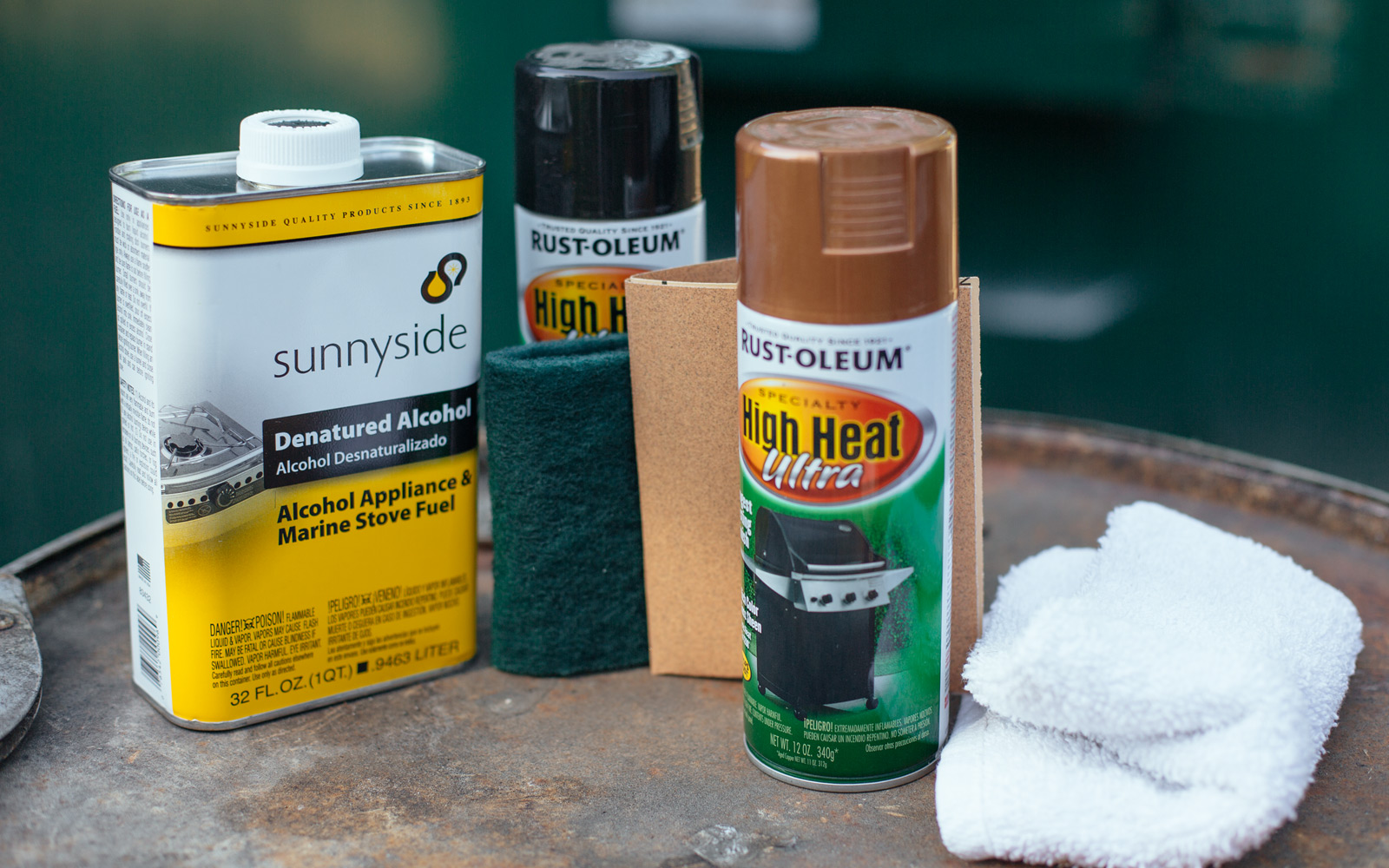
an image of rustoleum spray paints and materials to use to spray paint a fire pit
Can You Spray Paint a Fire Pit?
Yes, you can spray paint a fire pit, and most makeovers start with one of the steel fire pits people already own. For a faded or rusty one it’s the fastest fix going. High-heat spray paint goes on in minutes, dries in a day, and resists 1,000°F to 2,000°F depending on the brand. The catch is the paint, not the technique.
Spray gives you something a brush can’t: even coverage with no streaks, plus full control over color. Turn a plain black steel bowl into metallic copper or bright red for the price of a couple of cans, and a coat of color makes a tired pit look new again. One honest limit: the finish fades under constant heat, so plan on a refresh every year or two.
What Kind of Paint Withstands the Heat?
Only high-heat spray paint survives a fire pit. Regular art and house paints can’t take the radiant heat off live embers, and some turn flammable when they do. Two brands dominate this category.
Brand
Temperature rating
Notes
Rust-Oleum Specialty High Heat
1,200-2,000°F
Popular DIY pick; resists fading and flaking on grills, pits, and engines
Krylon High Heat
up to 1,000°F
Fast-drying; resists chipping, fading, and peeling near direct flame
Rust-Oleum’s Specialty High Heat line is rated to 1,200-2,000°F per the label, enough for the firebox of a wood-burning pit. Krylon High Heat covers up to 1,000°F, which handles the outer shell most jobs need. Whichever you grab, read the label first and match the rating to where you’re painting. The outside of a pit runs cooler than the inner bowl, so 1,000°F paint is fine for the shell while the firebox wants the higher number. Don’t paint the interior where flames touch metal unless the can clears it.
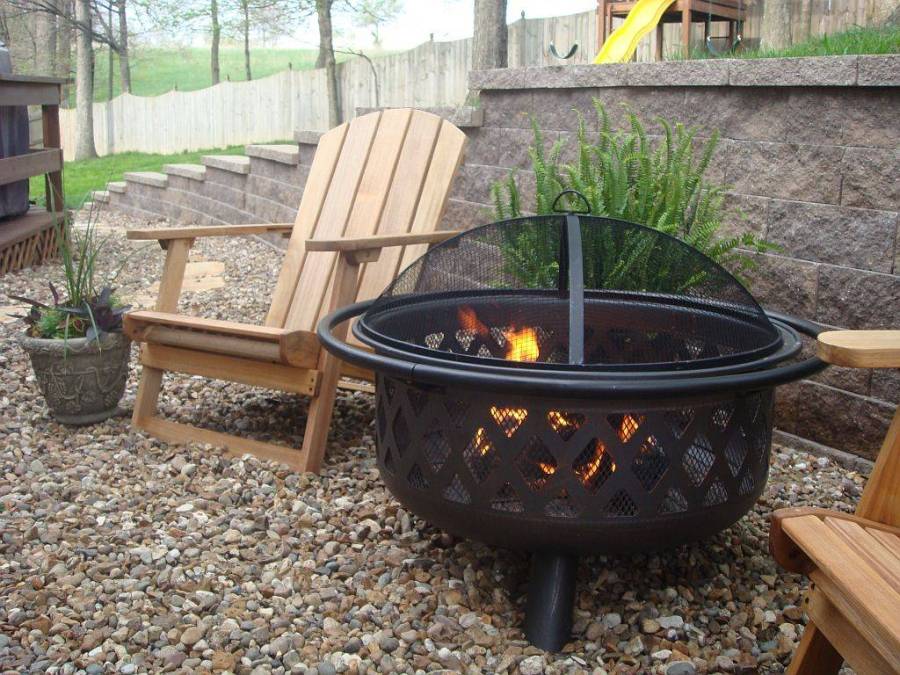
A backyard with a round, mesh-covered fire pit, wooden Adirondack chairs, and potted plants on a pebble ground, with a wooden playset in the distance.
How to Prep and Spray Paint a Fire Pit
Prep is 80% of the job, and skipping it is why most paint fails early. The whole thing takes an afternoon plus overnight drying. Work in a ventilated spot, lay down a drop cloth, and follow these five steps.
Clean and degrease. Wipe the pit with warm soapy water to lift dirt and soot, and use a wire brush on stubborn, sticky spots. Any grease or loose old paint left behind is a spot the new coat won’t grip.
Sand the surface. Scuff the whole pit with 80-120 grit sandpaper to strip rust and flaking paint and give the metal the rough tooth fresh paint needs. Don’t reach for fine polishing grits; 80-120 is the range for stripping and scuffing.
Wipe down again. Sanding leaves fine dust. Wipe it clean and let the metal dry, because painting over dust ruins adhesion just like skipping the degrease.
Spray thin coats. Hold the can 8-12 inches away and lay down several light passes instead of one heavy one. Two or three coats give full, even coverage, and high-heat paint dries fast enough to recoat the same day.
Cure overnight. Let the pit dry fully before you reassemble or move it. Some high-heat paints also need a heat cure, a few controlled burns, to fully harden, so check the label. A fresh coat also forms a barrier that helps keep the pit from rusting underneath the color.
How Long Does Spray Paint Last on a Fire Pit?
Applied right, high-heat spray paint lasts about 2-3 years on a fire pit before it needs a touch-up. The lifespan rides on three things: prep, paint quality, and how hard you use the pit. Prep matters most: a degrease plus 80-120 grit sanding strips the metal so the coat grabs hard, while a quick wipe leaves soot and oil that break the bond. Cheap cans run low on resins and pigment and fade faster, while a premium high-heat formula holds color longer for a few extra dollars. And a pit you burn weekly needs touch-ups sooner than one used a few times a season.
Variable
Lasts 2+ Years
Lasts 1-2 Years
Lasts < 1 Year
Proper surface prep
✅
High-quality paint
✅
Light usage
✅
Heavy usage
✅
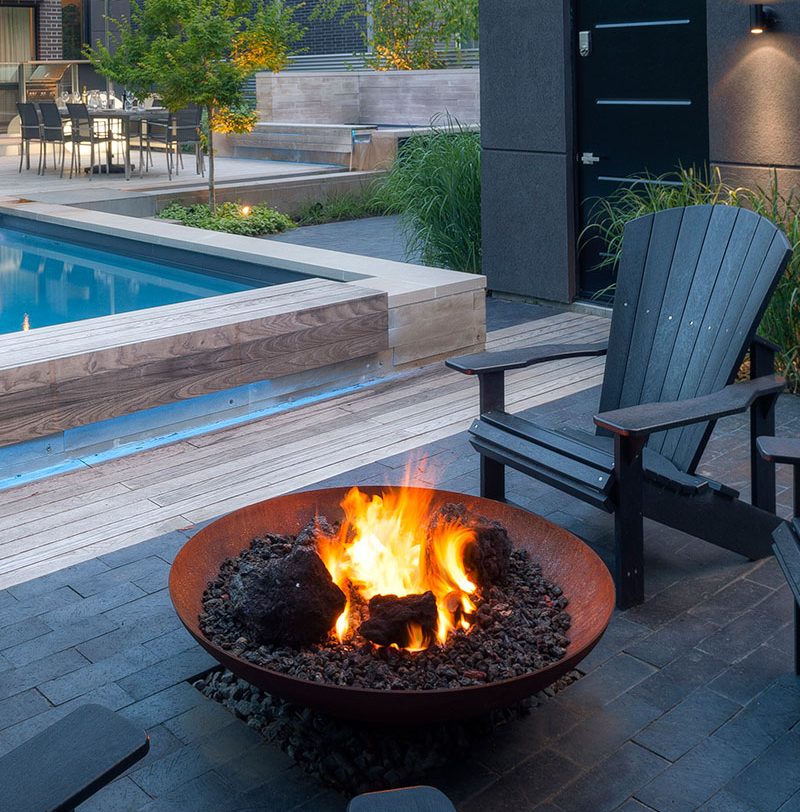
A modern backyard setting with a bowl-shaped fire pit, wooden seating, and a swimming pool in the background, during the evening.
Catch dull color or early flaking and recoat right away, before bare metal shows. If your pit is structurally shot rather than just ugly, our fire pit buyer’s guide covers when a replacement beats a makeover.
FAQ
What is the first step to spray paint an outdoor fire pit?
Cleaning comes first, before any sanding or paint. Wipe the pit down with warm soapy water and a cloth to remove dirt and residue, and use a wire brush on stubborn spots. For sticky buildup, dish soap cuts right through it.
Should I sand my fire pit before spray painting it?
Yes, sanding is a step you can’t skip. Scuff the surface with 80-120 grit sandpaper to strip old paint and rust and give the new coat a rough surface to grip. Skip it and the paint peels far sooner than it should.
How can I protect my patio while spray painting my fire pit?
Overspray drifts, so lay down a barrier around your work area. A drop cloth or tarp under and around the pit catches stray paint and makes cleanup painless. It’s a 30-second step that saves you scrubbing speckled concrete later.
Is it okay if I paint my fire pit in an enclosed patio?
Only with serious ventilation. Spray paint fumes build up fast and are harmful to breathe in a closed space, so even on an enclosed patio you’ll want doors and windows open and air moving. An open-air spot is safer whenever you can manage it.
What should I do after spray painting an outdoor fire pit?
Let it dry completely, ideally overnight, before you touch it. Once it’s fully cured you can reassemble any parts and set the pit back in place. Check the label too, since some high-heat paints need a few controlled burns to fully harden.
Are there other options besides spray painting my outdoor fire pit?
Spray paint is the easiest refinish, but it’s not the only one. You could try a faux finish or a brush-applied high-heat coat for a different look, and the right choice comes down to your patio’s style and the mood you’re after.


Leave a comment